New stormwater regulations that went into effect in late 2025 acknowledge what experts have been saying for years: traditional stormwater ponds aren’t particularly good at removing the nutrients that are the primary source of pollution in Tampa Bay and many of its natural lakes and rivers.
But capturing those nutrients before they enter natural systems is easier said than done. The new regulations call for a stronger focus on BMPs (best management practices) to capture nutrients and suspended solids, as well as more rigorous maintenance and reporting to ensure the stormwater system operates as planned.
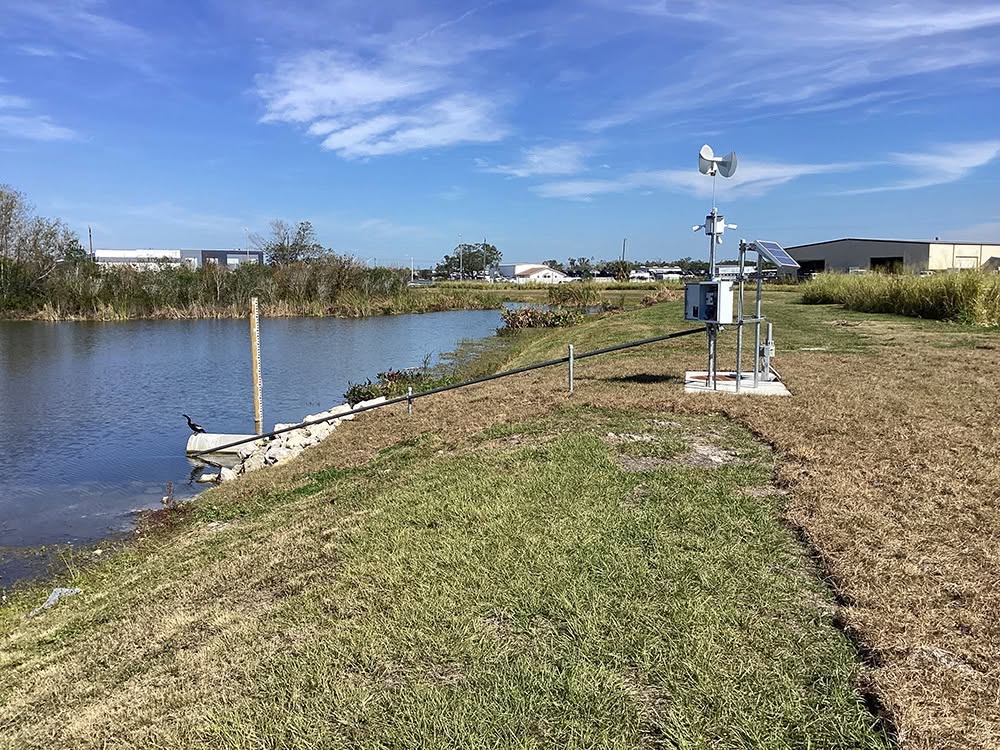
One of the technologies being tapped to meet those new requirements for nutrient removal is so-called smart ponds. Equipped with automated outfall systems (AOS) that release most of the water in the pond to increase their capacity when severe weather is predicted, they provide additional flood protection. The technology also allows them to retain stormwater for longer, allowing natural processes to remove more nitrogen when the pond isn’t needed for flood protection.
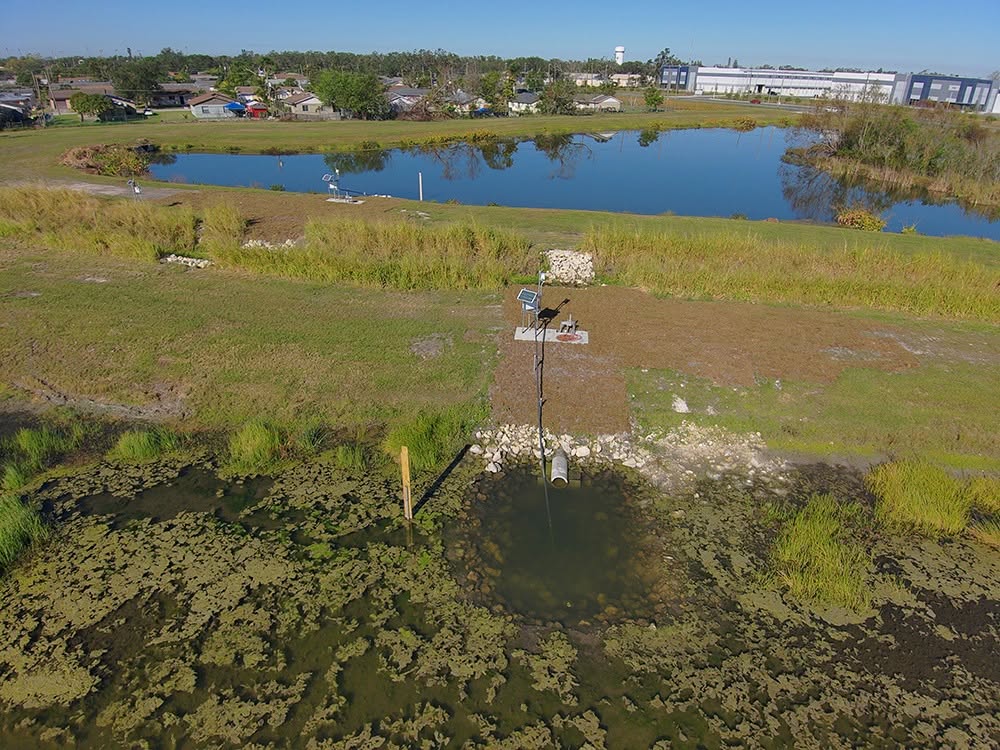
In Manatee County, that’s showing up with AOS technology at two stormwater facilities along 17th Street East (north of 301 east of 41), near Sylvan Oaks. “Our stormwater engineers were working on improving flood protection by installing automated controls,” said Greg Blanchard, the county’s environmental program manager. “While they were developing their concept for providing additional flood protection, I mentioned that the same process can be used to improve the nutrient removal performance, particularly in older ponds.”
The challenge is that removing nitrogen from stormwater isn’t a straightforward process. Dozens of variables come into play – from plant uptake of nutrients to soil filtration and the denitrification that occurs when anaerobic bacteria convert nitrates into nitrogen gas that returns harmlessly to the atmosphere. “There are a lot of technical issues that need to be resolved, but now is the time to start investigating and using continuous water quality monitors to document the change,” Blanchard said.
But even that brings its own issues. Continuous water quality monitors are expensive to purchase and challenging to maintain, particularly in nutrient-rich waters where they can clog with algae. Using funds left over from the Deepwater Horizon settlement, Manatee County purchased six continuous water-quality monitors and installed them at three locations, including one at Robinson Preserve, which leads directly to Tampa Bay.
While final results are still months away, the monitors are already showing that holding water in a pond for longer periods, allowing those natural systems to work, can remove nutrients that would have washed out of the pond without an AOS. “Some of the early results are really interesting,” he notes. “After a rainfall you see a huge spike in nutrients, and then you see a decline for a week or so as those biological activities work, so we can tell that x amount of nitrogen has been removed from the system.”
A key advantage for Manatee County is that the AOS systems can be installed in existing ponds. “Those ponds were engineered to meet certain criteria but there’s reason to believe that we can leverage the timing of releases to gain more treatment from an older pond designed to an earlier stormwater rule. If the automated system lets us hold on to that water for a longer time, we should see an additional level of treatment.”
While Manatee is still working to prove the efficacy of its systems, Florida-based National Stormwater Trust is using the technology to revamp ponds owned by the Florida Department of Transportation, as well as by Port Tampa and Port Manatee. That’s earning credits they can sell to developers to offset stormwater treatment requirements for new construction in Hillsborough, Pinellas and Manatee counties.
Rather than selling credits, Manatee expects to use its credits against the nitrogen-loading limits set as part of the Tampa Bay Estuary Program’s Reasonable Assurance Program (RAP). That knowledge can also be transferred to other counties in the region that are working to reduce nutrients in stormwater, which has become the largest source of pollution in Tampa Bay.
“Any place that needs additional nutrient reductions should be able to leverage this new technology. There are a lot of technical issues remaining, and the permitting agencies set the bar pretty high, because they want to make sure it works,” Blanchard said. “But I will say that the time to start investigating and applying automated stormwater outfalls and continuous water quality monitors has arrived.”