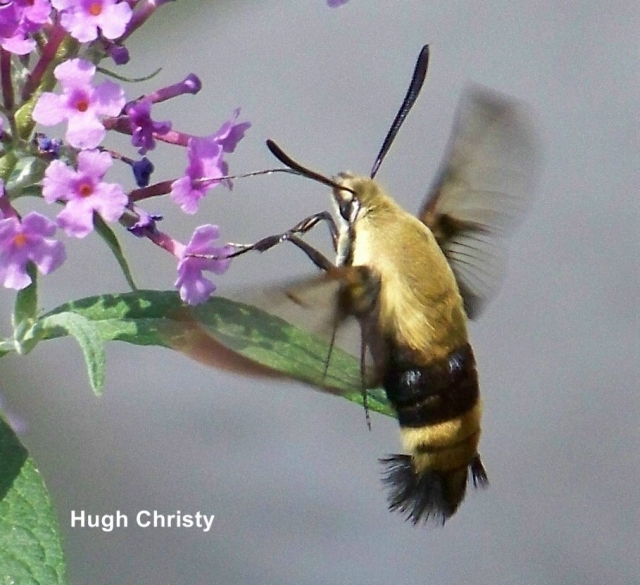
While bees and butterflies are recognized for their critical roles in pollinating food and flowers, pollinators that fly at night may be even more important. A recent report published in the journal Nature indicates that insect activity is 31% higher at night than in the day, and that percentage is even higher in warm ecosystems.
It’s easy to learn about nocturnal pollinators, says Andrea Andersen, recreation supervisor at Moccasin Lake Nature Preserve in Clearwater, whose personal passion is things that fly in the night. She’ll share that expertise at the monthly meeting of the Pinellas chapter of the Florida Native Plant Society on Thursday, Oct. 8 at Moccasin Lake. The program will include both an indoor presentation and a nighttime walk through the preserve.
“I’ve been doing these walks for 10 or 12 years because I’ve always been interested in what goes on outside at night,” says Andersen, who was formerly the nature preserve supervisor at Boyd Hill Nature Preserve and an adjunct professor at Eckerd College. “Watching for moths and other nocturnal pollinators doesn’t require a lot of space so you can see them in your own backyard.”
She recommends setting up a white cotton sheet on a frame to keep it steady, with basic black lights behind it to attract insects. As you wait a few hours for the pollinators to come, you can create an iNaturalist link to report what you’ve found. Working with that app will also help you identify the insects you observe.
The night critters begin to slow as dawn approaches, giving you an opportunity to capture them in small plastic condiment cups to photograph with your phone’s macro lens.
To increase your chances of seeing nocturnal pollinators, Andersen suggests reducing as much artificial light as safely possible, eliminating or greatly reducing the use of pesticides, and growing native plants that will attract them. “Growing the plants they need doesn’t require a large backyard, but you’ll want to have plants their caterpillars can eat and plants for them to nectar on, especially plants with white or light-colored flowers and strong scents.”
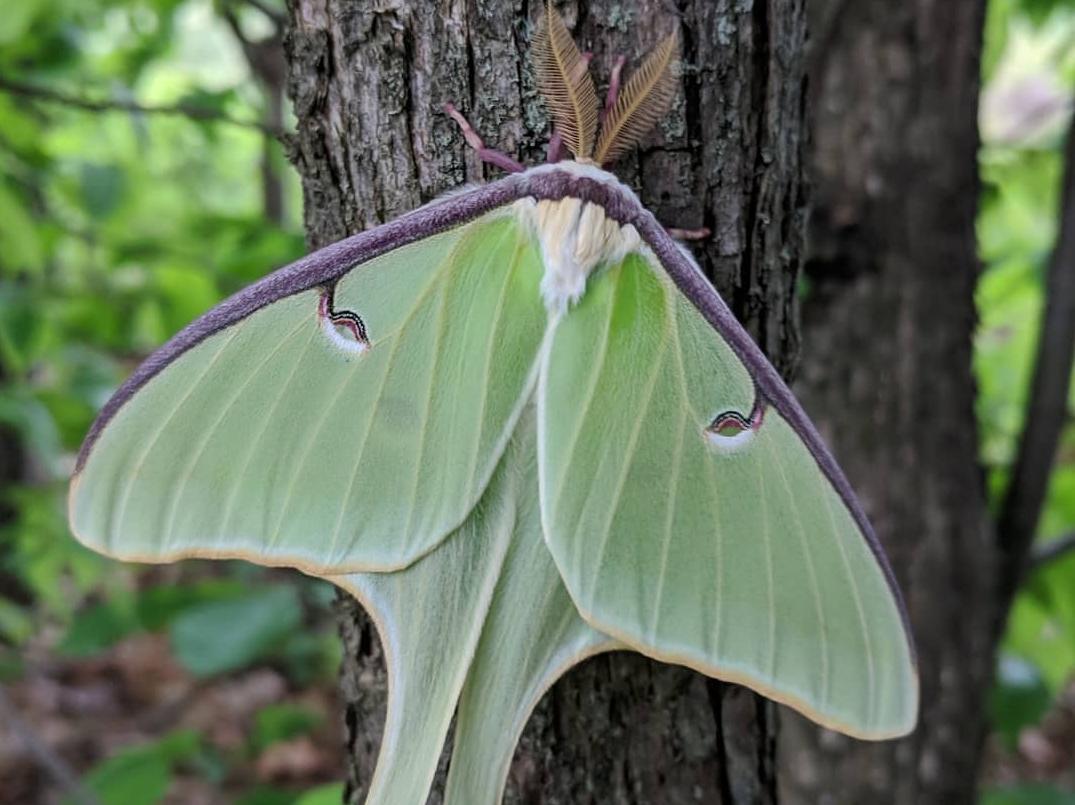
Trees like maples or oaks host many moth caterpillars, including the infamous buck moth that thrives in Florida oak trees and stings on contact. Most caterpillars, however, are harmless to people and do not sting, she emphasizes.
Like butterflies, some caterpillars have very specific food requirements. The yucca moth, for instance, has evolved so that it only feeds on seeds from the Yucca filamentosa, — also known as Adam’s needle. “They co-evolved and the yucca moth is the only insect that can pollinate it,” Andersen said.
Other plants that attract nocturnal pollinators include:
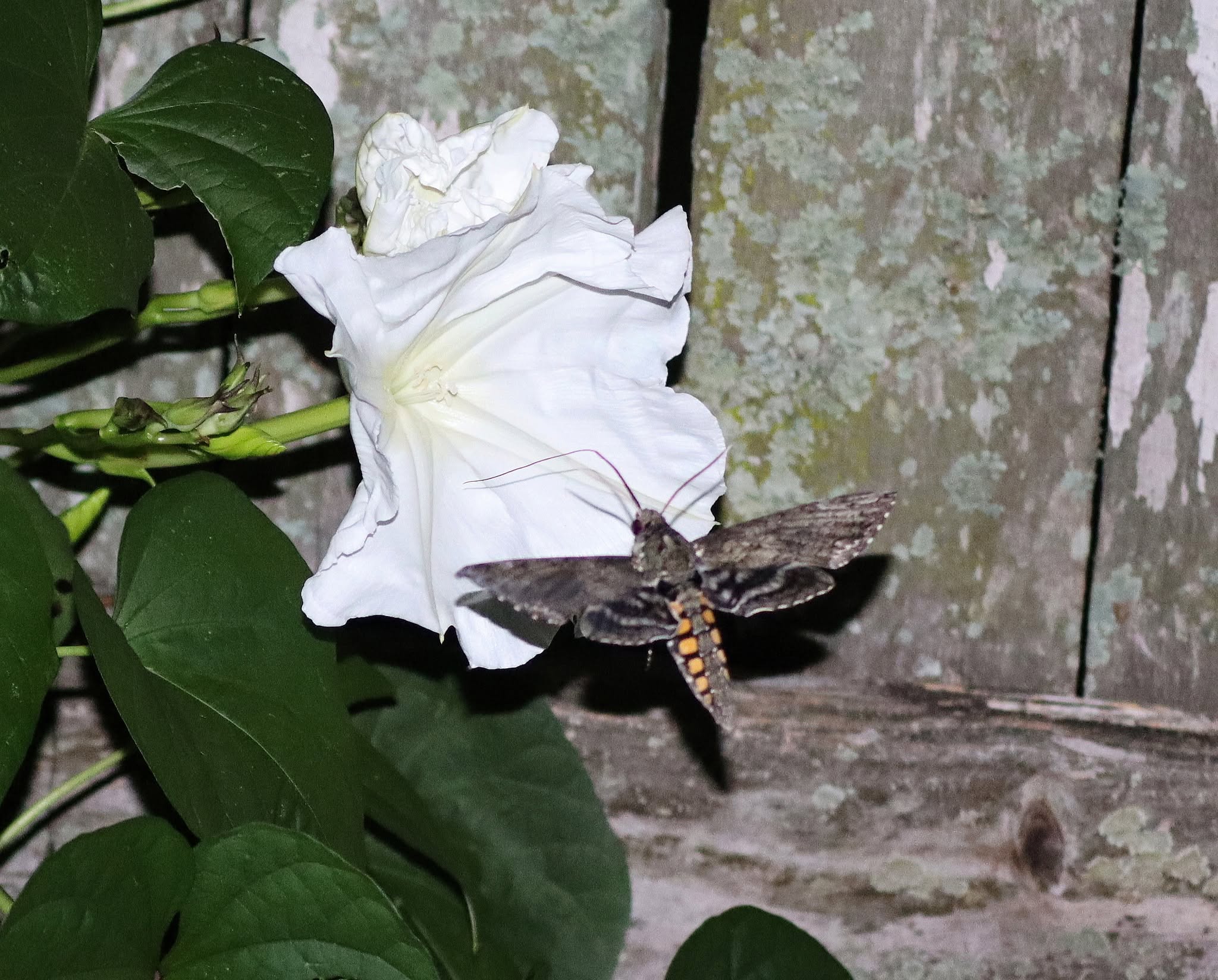
· Moonflower, with large white flowers and a strong, sweet scent, attracts many moths, notably the luna moth and the hawk moth – also known as the hummingbird moth. “If you plant moonflower, be careful, though. It’s easy to grow, but maybe too easy because it can take over your yard. We recommend a trellis to contain it.”
· Evening cut leaf primrose is a low-growing native plant that blooms at night.
· Saltbush is nearly invisible until it pops out in what resembles a giant snowflake in the fall, attracting pollinators all day and night. “When I did night walks at Boyd Hill, that saltbush had such a diversity of insects,” Andersen said. “Every month, I was seeing something different.”
- Native grapevines serve as larval food for several species of hawk (sphinx) moths.
· Although not native, night-blooming cactus or similar epiphytes have spectacular white flowers that open at night.th
· Most gardeners know that tomatoes attract tobacco hornworms, but they may not know those voracious caterpillars turn into gorgeous sphinx moths. “It’s a balancing act,” Andersen said. “I intentionally plant extra tomatoes knowing that these pests are going to come because I think being generous with the insects is just as important as me getting tomatoes.”
Although interest in moths and other nocturnal pollinators is relatively new, Andersen said it’s a growing trend as more people realize how important they are. “There is a whole force of little creatures doing their work at night, and it brings me a lot of joy to discover them, to see the things I had no idea were happening, and no concept of how important they are to our ecosystems.”
For more in-depth information on noctural pollinators, Fairchild Botanical Gardens has published a book focused on South Florida pollinators but there is a great deal of overlap: https://fairchildgarden.org/wp-content/uploads/2020/06/Moths-of-South-Florida-1.pdf
By Vicki Parsons, origomally published Oct. 2, 2026