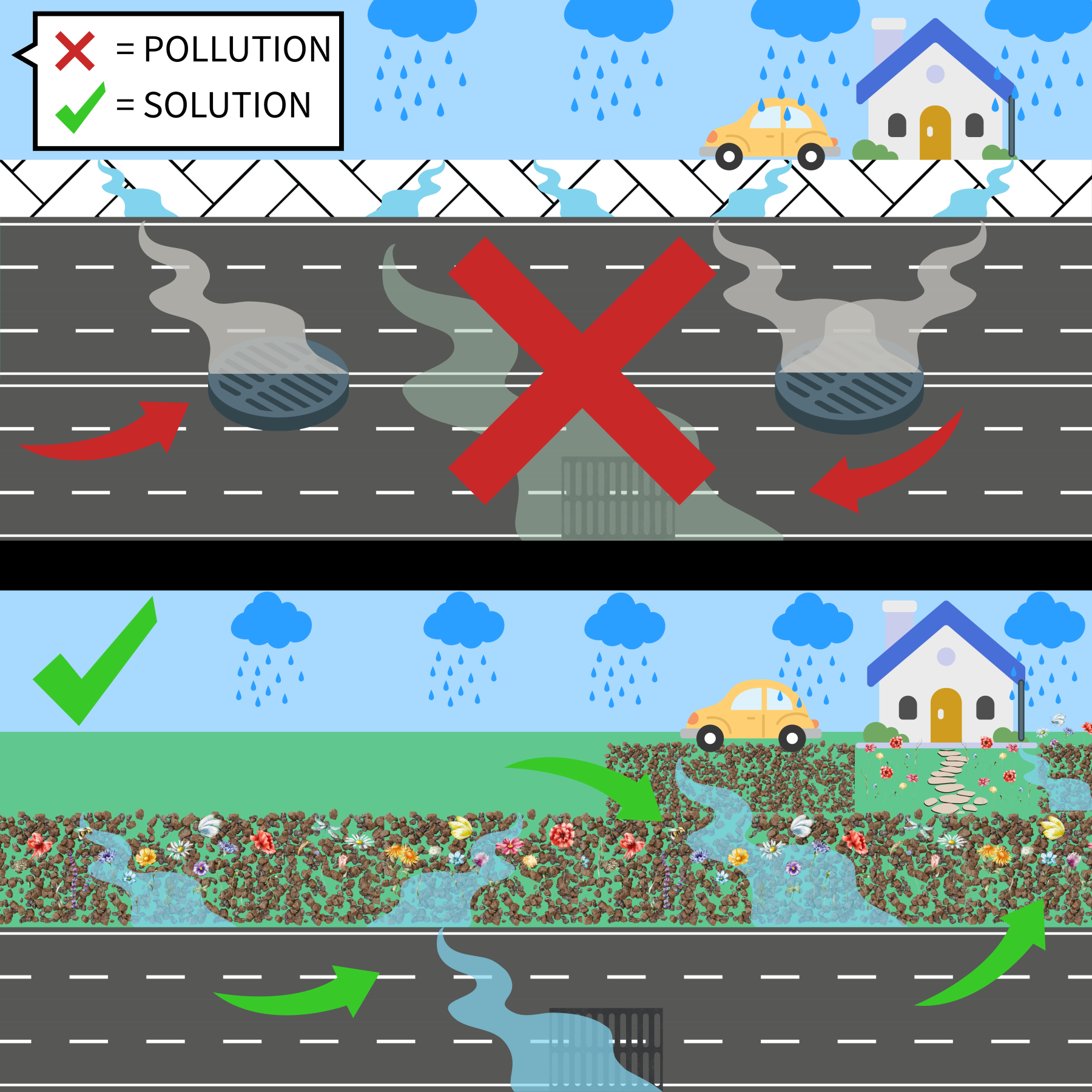
Sometimes a walk in the park is just that — but if you’re visiting in Sims Park in downtown New Port Richey, a walk might also be a learning experience. There, the Stormwater Story Stroll outlines how rainwater collects the contaminants that account for about 40% of Florida’s total water pollution, impacting hundreds of lakes, rivers and estuaries in the state.
Sims Park, which borders the Pithlachascotee River, better known as the Cotee River, is the perfect spot to tell the story, said UF/IFAS Sea Grant Pasco Extension Agent Dr. Megan Moore. “It’s right on the river, and it also has ponds, so it has real-life examples within the park, plus it’s a large recreational park with many community events and festivals with a lot of foot traffic.”
Stormwater picks up contaminants as it flows across lawns, parking lots and roads before entering a nearby water body, typically without any kind of treatment to remove those pollutants. But unlike most environmental problems, stormwater pollution could easily be resolved by everyday people if most of us are willing to work at it. “Simple things like preventing litter or picking up pet waste can lead to better water quality and healthier natural habitats,” Moore said.
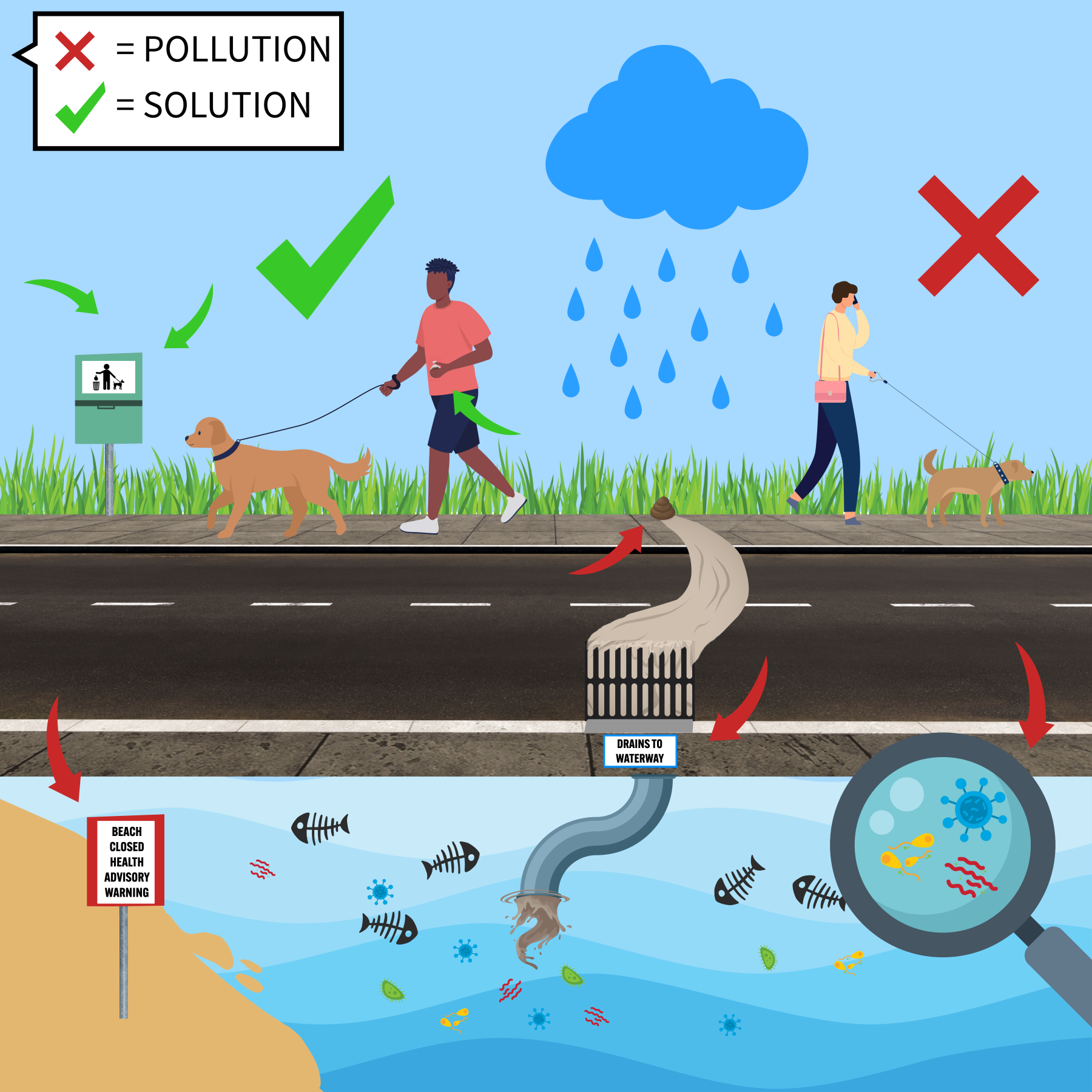
Funded through a grant from the Florida Department of Transportation and Tampa Bay Regional Planning Council’s Stormwater Outreach and Education Program, the Stroll is designed around 10 educational signs strategically located within the park near sites that display real-world examples of best practices. Each of the signs addresses one form of stormwater pollution, with an easy-to-understand cartoon drawing pointing out pollution-solution alternatives.
QR codes on the signs direct visitors back to a website and blogs where the issues are more clearly explained. “What we want people to do as they look at the signs is to say ‘Oh, I see how this could work,’ or ‘I see why that might be a problem,’ and then give them the information they need to change.” The web links also highlight volunteer opportunities and links to more in-depth information.
The sign for litter, for instance, shows that trash typically ends up in nearby waterbodies no matter where it originated from. The simple cartoon shows people how to dispose of it properly. The webpage provides more information: litter harms ecosystems when animals become entangled in it, or it releases microplastics and other chemicals as it decomposes. It can also clog storm drain systems, causing localized flooding. Then it includes links to volunteer opportunities with Project T.R.A.P. – Trash Reduction for Aquatic Preserves – which installs and maintains catchment devices that trap litter before it reaches the coast – and Keep Pasco Beautiful.
The sign for pet waste shows how easily it enters a waterway, and what can happen when it does. The webpage provides details about how nutrients in pet waste can cause algal blooms that kill fish. It also explains how pet waste releases bacteria and viruses that can cause serious illnesses, making beaches unsafe for swimmers, and includes a link to Florida Health’s water sampling report.
Plant debris (such as fallen leaves, trimmings and mowed grass) is another source of pollution that’s not always recognized as such. Like pet waste, plant debris is “natural,” but it’s not natural when it’s concentrated in waterways. Plant debris can clog drains and high levels of nutrients contribute to stormwater. Leaving debris where it falls, scattered across your yard, allows it to break down slowly so nutrients can be absorbed back into the soil.
The next stop for the Stormwater Story Stroll is the Wesley Chapel District Park in the Cypress Creek watershed. “It will be a little different because the park is inland, not on the coast, and parts of it use reclaimed water for irrigation,” Moore said. “It’s a larger park too, with a really popular walking trail.” Rather than the storm surge sign that explains the difference between coastal flooding and stormwater at Sims Park, Wesley Chapel signage will focus on using reclaimed water, which is already high in nutrients and can increase stormwater pollution if it’s combined with additional fertilizer. Although reclaimed water is treated, it still contains high levels of nutrients and can be a significant source of pollution if too much is applied.
The Wesley Chapel signage will also include mile markers for the walkers who use the park, she adds. “We want to attract that extra attention because so many people don’t realize what a difference they can make in preventing stormwater pollution. The more people involved and doing what they can, the greater difference we’ll see in water quality and natural habitats.”
By Vicki Parsons, originally published November 24, 2026