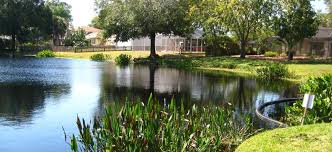
Across the state, more than 76,000 stormwater ponds are woven into Florida neighborhoods, often as the focal point of waterfront homes.
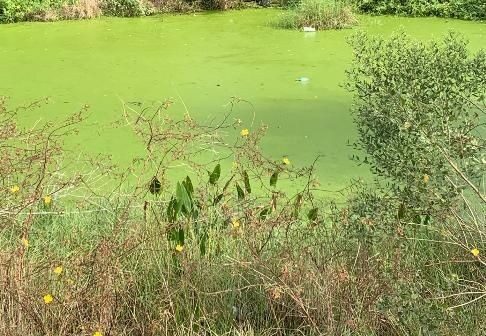
Yet beneath their serene surfaces, some of these ponds are struggling. Many are overloaded with excess nutrients, fueling algal blooms and degrading water quality. At the same time, rapid urban development is sending more stormwater rushing into ponds than ever before.
In fact, stormwater has become the single largest source of pollution in Tampa Bay, often overflowing from ponds in neighborhoods where residents don’t realize that what happens in their backyards – from fertilizer and pesticides to animal waste and yard debris – ultimately ends up in Tampa Bay.
A new report from the University of Florida Institute of Food and Agricultural Sciences (UF/IFAS) shows that most residents — including many members of homeowners association (HOA) boards — don’t realize that stormwater ponds have two critical jobs– flooding and pollution removal.
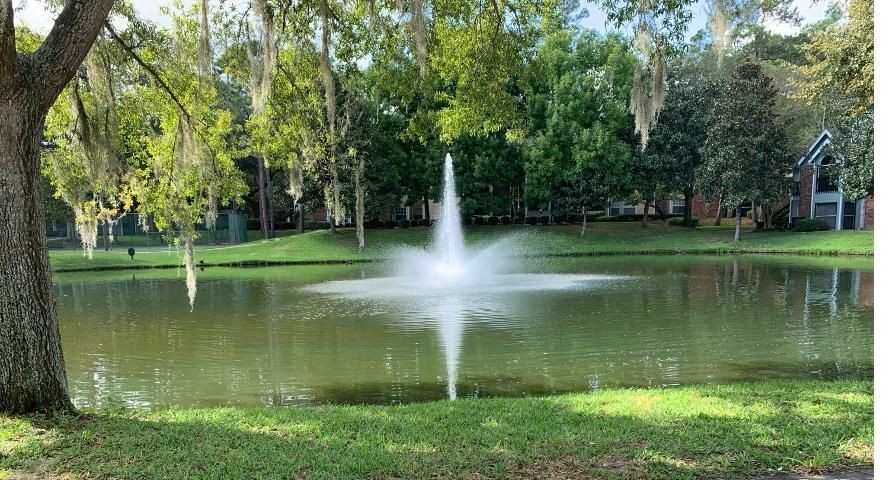
About 70% of respondents recognize that stormwater ponds help prevent flooding, but only 37% knew that stormwater ponds are designed to capture pollutants – specifically nutrients that cause harmful algal blooms like red tide – before they reach natural waterways.
“Whether any given pond actually achieves that removal effectively is a separate question and depends heavily on maintenance, buffer zones, plant selection and nutrient loading,” said Hayk Khachatryan, a professor of food and resource economics at UF. “That is why homeowner knowledge matters.”
Legislation that took effect late last year addresses nutrient pollution in stormwater with stringent new requirements, but it only impacts new stormwater ponds; the thousands built since they were first required in 1986 only function effectively when homeowners and HOAs understand the issues.
“The gap between 70% and 37% tells me that the visible, dramatic function (water rising during a storm) registers with people, while the invisible, slow function (filtration and sediment settling) does not,” said Khachatryan. “People understand what they can see. That has real implications for how we communicate. The water-quality story needs to be made visible and concrete for homeowners to internalize it.”
Two other findings Khachatryan found significant:
· 29% thought stormwater ponds were there for aesthetic reasons.
· 18% did not know about the Florida-Friendly Landscaping™ recommendation to maintain a 10-foot wide low-maintenance buffer zone around stormwater ponds. There should be no chemical applications or mowing in these zones, which help filter pollutants from runoff before they enter the pond.
And although this survey did not address it, some Florida residents believe that stormwater is treated before it’s released in nearby surface waters. That may be the case in some, usually older, cities where stormwater and wastewater are treated in combined systems. However, that’s not the case in Florida, particularly in neighborhoods built since stormwater ponds were required.
And cleaning up those nutrients once they reach surface waters can be incredibly expensive. At the low end, street sweeping to collect litter and other pollutants typically costs about $189.00 per pound; at the high end, using specialized media filters in dedicated stormwater treatment facilities can cost more than $1,000 per pound.
Minimizing those costs – typically paid by taxpayers – will be critical. “We need to reach everyone in the community, not just those in leadership positions,” Khachatryan said. “These ponds are not just decorative features or amenities. They are engineered infrastructure doing real work for the community and local ecosystems.”
Educating residents about the importance of maintaining buffer zones and minimizing fertilizer and other pollutants in their yards will help ensure that stormwater ponds continue to do their vital work.
By Vicki Parsons, originally published May 18, 2026