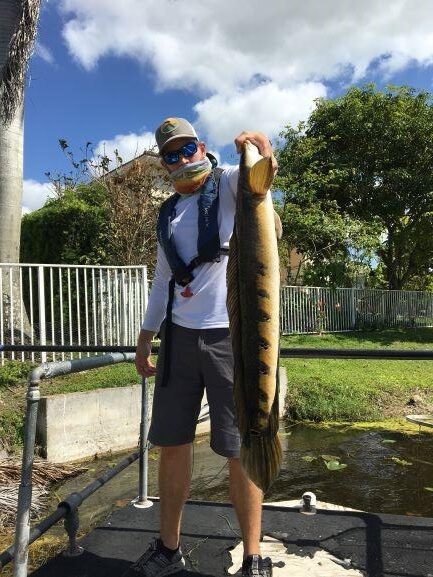
Environmental DNA, or eDNA, which allows early detection of invasive species by monitoring cellular material (like skin or feces) that organisms shed, is now being deployed in the Everglades to track two species that have also been documented in the Tampa Bay region.
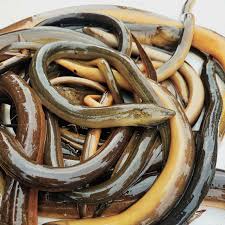
The Asian swamp eel and the bullseye snakehead are invasive, air-breathing predators that live in the Everglades, where they pose significant risks to native wildlife. Although both are cold-sensitive and found primarily in the southern portion of the state, the swamp eel has spread across the northern Gulf Coast, east into central Florida and south along the Lake Wales Ridge and was confirmed last summer at Circle B Bar Reserve in Polk County. The bullseye snakehead was documented near downtown Tampa and in the Manatee River in 2020.
At the UF/IFAS Fort Lauderdale Research and Education Center (FLREC), the Croc Docs Wildlife Research Lab team worked closely with the Bahder Vector Ecology Lab to create a novel environmental DNA-based test that can find these invaders without ever seeing them.
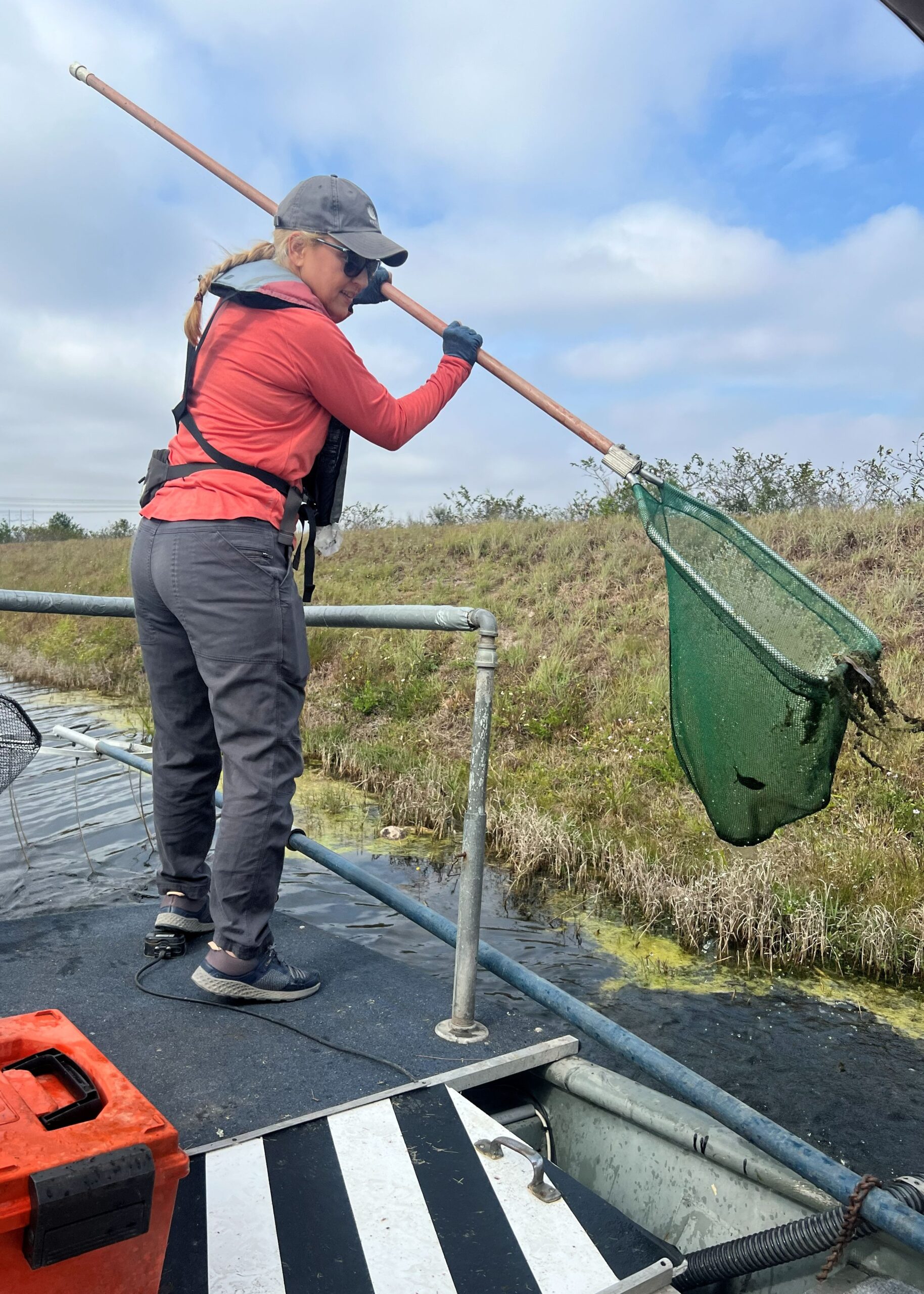
Photo courtesy Croc Docs
“In this study, we were able to take this new approach and apply it to real-world situations that gave positive results on both species,” said Brian Bahder, associate professor of vector entomology at the UF/IFAS FLREC and the senior author who developed the methodology.
The test can detect the presence of both species with one sample, whether they remain hidden in the murkiest of waterways or have left the area.
The Asian swamp eel, native to East and Southeast Asia, was documented in the United States in the 1990s. First observed in the southern Everglades in 2007, they have since spread across South Florida. In parts of the Everglades, the species has caused declines in crustacean and amphibian populations through predation and competition for food.
The bullseye snakehead, first documented in Florida in 2000, is a large, carnivorous fish capable of breathing air and surviving in low-oxygen waters. Like the swamp eel, it can survive in canals, marshes and swamps and may move short distances over land to a new habitat.
Detecting and removing these fish has long posed a challenge for wildlife managers. Asian swamp eels are primarily nocturnal and spend much of the day burrowed into muddy canal bottoms and shallow wetlands.
“Daytime electrofishing, a technique that uses a mild electric current to temporarily stun fish so they can be collected, is the most common method used to detect and remove them, but its effectiveness can be limited because the fish are often hidden during daylight hours,” said Melissa Miller, a research assistant scientist of invasion ecology who co-leads the Croc Docs.
To address this gap, researchers joined forces to design and validate a digital PCR (Polymerase Chain Reaction) approach. This laboratory technique copies and counts small amounts of DNA with high precision to detect extremely minute traces of genetic material shed into the water.
In controlled experiments, scientists detected bullseye snakehead DNA within five minutes of placing a fish in water. Field tests in canals where the species had been observed confirmed that the test accurately identified the species targeted while avoiding cross-detection of other common fish and wildlife.
“eDNA analysis by digital PCR is an incredibly powerful approach to invasive species monitoring due to the efficient workflow and high level of sensitivity that allows detection of a single cell in a water sample,” said Bahder.
Because the new test can screen for both Asian swamp eel and bullseye snakehead simultaneously, it offers a cost-effective complement for detection to traditional surveys that require crews, boats and specialized equipment. It can also help wildlife managers evaluate whether removal efforts are working by tracking changes in genetic signals over time.
“Given the strong validation results, we plan to deploy an eDNA sampling network throughout the Everglades ecosystem to evaluate the presence of other invasive species of interest,” said Sergio Balaguera-Reina, a research assistant and member of the Croc Docs. “However, scientists cannot always sample everywhere, and public involvement in reporting sightings of invasive wildlife and fish remains critical.”