

A local not-for-profit organization has been invited to join the United Nations’ Race to Resilience (R2R), an international initiative with 1,762 members in 139 countries working together to strengthen communities with the goal of protecting four billion people by 2030.
Ecosphere Restoration Institute, founded by Tom Ries in 2003, is also one of the few R2R members with boots-on-the-ground expertise in resilience. “It’s part of how the United Nations is implementing the Paris Agreement,” said Rene Wiesner Brown, Ecosphere’s senior director of habitat restoration. “I’m a member of their expert review group, and knowing their goals, I could see a lot of overlap between our missions.”
Strengthening communities in the face of climate change encompasses multiple efforts around the world, from developing early warning systems for weather-related challenges and building resilient communities with improved sanitation to restoring thousands of acres of forests and underwater ecosystems.
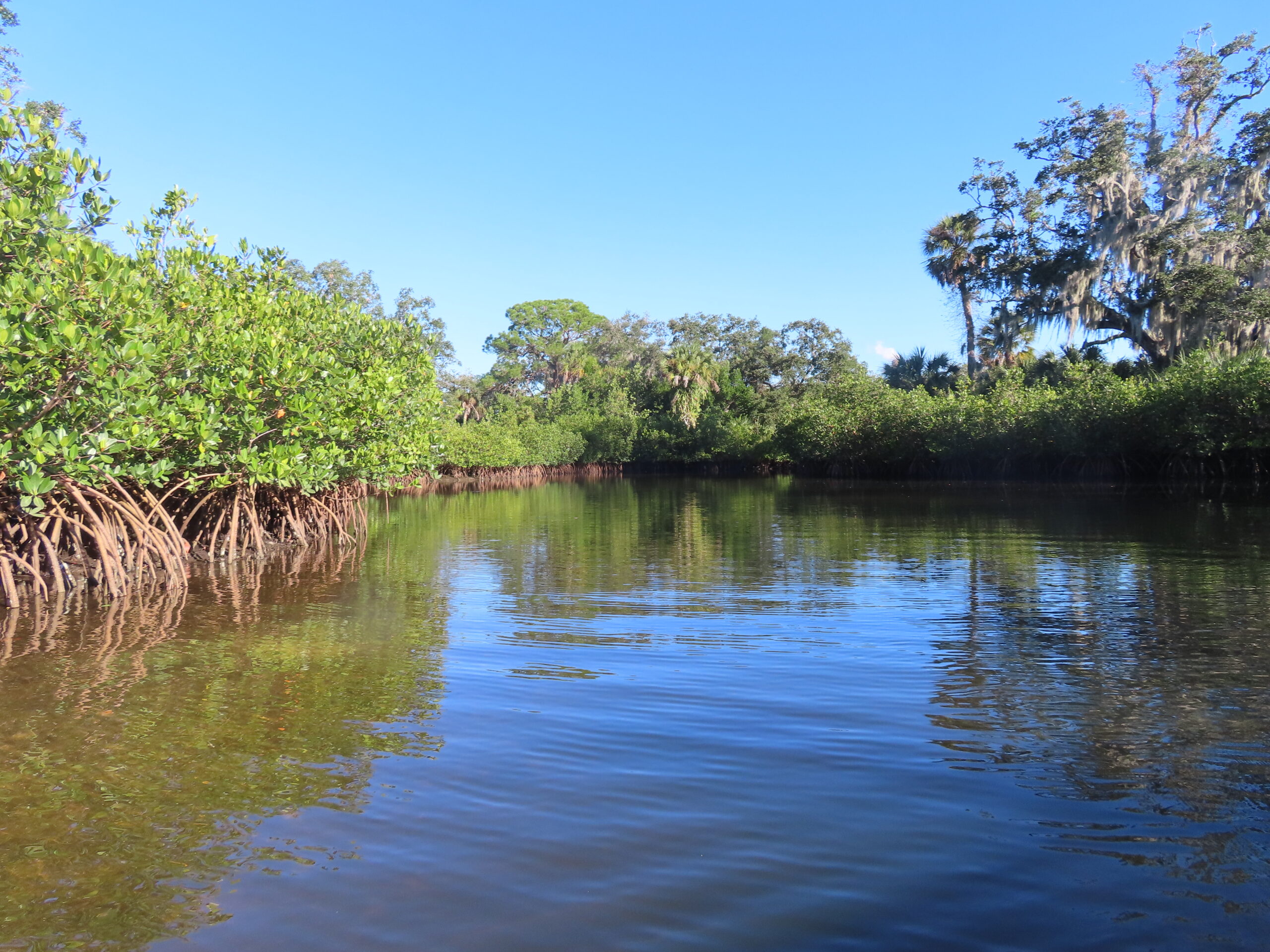
Three focus areas for those marine ecosystems include mangroves, seagrasses, and corals. Ecosphere currently addresses mangrove and seagrass habitat restoration and living shorelines,” Ries said. “We haven’t done much with corals, but they perked up when we started talking about living shorelines and planting mangroves, like our big restoration projects have done in the past. They were very interested in the fact that we could actually go in and take altered lands and create productive estuarine habitats, plus they liked our work with seagrasses.”
Ecosphere is working with R2R experts to track the number of people impacted by those restoration projects, because that’s the metric most important to them. “We first talked about whether Ecosphere is a good fit for them, and then started discussions about how we can go about translating acres to the number of people impacted,” Brown said. “We’ll work with them to set some specific goals, and make sure we are measuring the information that helps them track their global goals.”
In terms of local accomplishments, Ries details the projects completed or underway over nearly 40 years:
- 150 habitat restoration and stormwater retrofit projects, plus 54 living shorelines completed in a career that spanned work at the Southwest Florida Water Management District’s SWIM (Surface Water Improvement and Management) program and then a consulting firm, coupled with Ecosphere projects.
- 100 acres of seagrass restoration statewide, with another 70 acres underway.
- Multiple spring restoration projects, including Ulele and Palma Ciea, plus Lowry Park Spring, Bradenton Mineral Spring and Purity Spring.

While the term “living shoreline” is relatively new, the work isn’t, Ries notes. “At SWIM, we were going into places where farmers had done whatever they needed to do to keep saltwater out of their fields. When the fields eventually got overrun, the farmers abandoned them and we went in and tried to recreate those natural areas. So the term may be new but the work isn’t.”
Sharing that experience with people in other countries is vital, although what works in Florida won’t necessarily translate to other countries, he adds. “A lot of these initiatives are large-scale, multi-country efforts, so we’re one of the smallest entities involved, but it’s noteworthy that they see that what we’re doing is important, and could be scaled up.”
While every project will be different, the tried-and-true techniques developed in Florida can be transferred to other locations. “We’re not going to try to tell anybody what to do – we just want to show them what works for us so they can avoid some of the pitfalls we’ve seen over the past 40 years.”
Ries and Brown also expect Florida to benefit from the collaboration. “I think the partnership will go a long way,” Brown said. “It could lead to collaboration, it could lead to funding and it will definitely lead to knowledge sharing and enhanced perspectives. And then just knowing that our work is being counted as part of these global goals is so meaningful. It’s such an honor to be part of it.”
By Vicki Parsons, originally published August 25, 2025