By Vicki Parsons
When most people think of trees, they think of majestic live oaks that tower over neighborhoods, bringing welcome shade for residents and providing food and shelter for wildlife. Even though their majestic size means they don’t work for many yards, that doesn’t mean homeowners should give up on planting trees.
Amanda Marek at the Marion County UF/IFAS Extension Service has compiled a list of small flowering trees for Florida yards. Since Marion County is further north than most of the Tampa Bay region, these trees will be more cold-tolerant than trees recommended for our southern neighbors. Some are native, some are Florida-friendly, but all are perfect for even small yards.
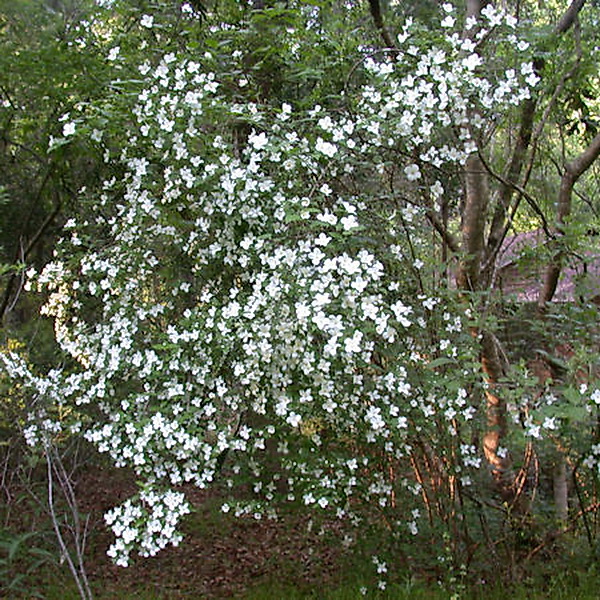
Scentless mock orange or English dogwood (Philadelphus inodurus), is a Florida native, although its range extends much further north. It’s a true harbinger of spring, with large white flowers that attract bees and butterflies. Despite its common names, it’s not related to either oranges or dogwood. Although the flowers do resemble dogwood, the orange moniker is confusing since the flowers are much larger than citrus blooms – and it does have a pleasant scent, although not as strong as citrus. Mock orange can be grown as a small tree – up to 10 feet tall — or a multi-stemmed shrub. Unlike many flowering trees, it blooms profusely even in shady locations, where its branches may take on an attractive weeping habit.
Red buckeye (Aesculus pavia) is another shade-loving Florida native with striking tube-shaped red flowers in the spring, followed by large fruit that squirrels love. It’s larger than the English dogwood, at about 20 feet tall. Its fruit is toxic to humans and some other animals, including cats and dogs, and it grows easily from seed, including those planted by squirrels.
Two native plums (Prunus spp.) are commonly used as small trees in Florida yards, Chickasaw and Flatwoods. They both have spectacular white flowers in the early spring, followed by fruit, which probably won’t live up to grocery store standards but is much beloved by many birds and small mammals. Flatwood plums have thorns; Chickasaws don’t, which makes them a better choice for small yards where children and animals may play. Both prefer full sun and can reach 15 to 20 feet tall.
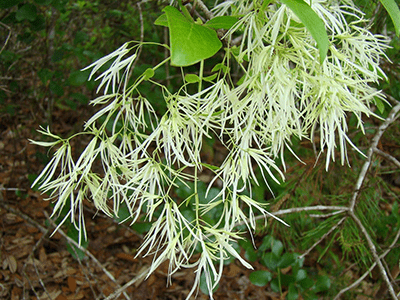
White fringe tree (Chionanthus virginicus) is a native that grows to about 20 feet tall. Like many spring bloomers, it’s easy to miss in a landscape until its show-stopping flowers appear in the spring. They’re ideal for planting in urban areas because they adapt to most soil types (except in salty areas). Both males and females have flowers, but the female trees will produce olive-like fruit that are favored by birds, although not edible for humans.
Pineapple guava (Acca sellowiana) not only has gorgeous edible blooms, it produces tasty fruit later in the summer. Some people say the fruit tastes like guava, although others compare it to a minty pineapple. Even without those benefits, it’s an attractive evergreen that can be grown as a small tree, a large shrub or part of a dense hedge.
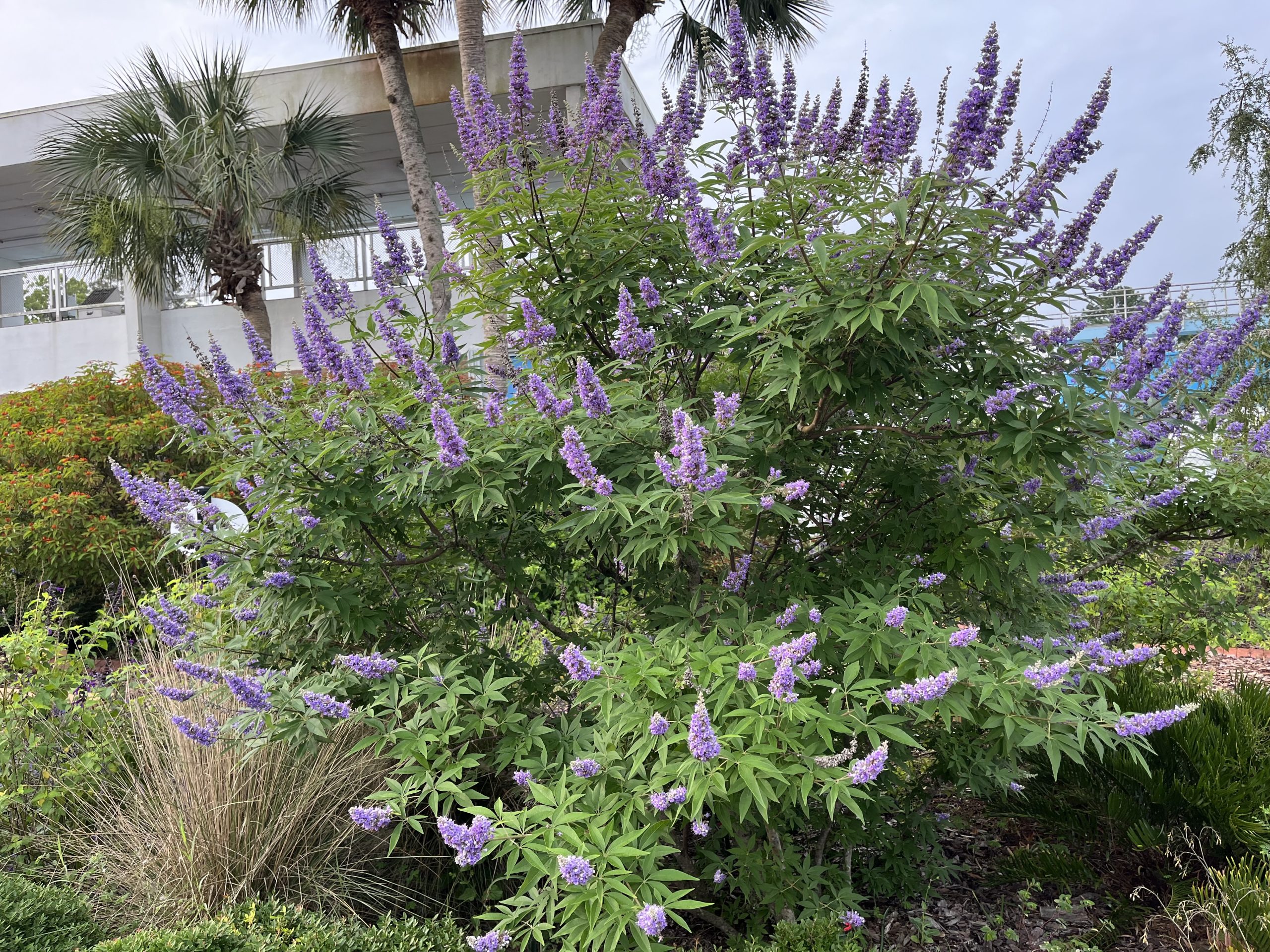
Chastet Tree, (Vitex agnus-castus) is another plant that can be grown either as a small tree or a large shrub. It’s another show-stopper in the spring, when 10-inch spikes of purple flowers show up. It blooms intermittently all summer long, although you’ll get many more blooms if you cut the flowers back as they die. In my Brandon landscape, we call it the entertainment center because it attracts so many bees and butterflies, including threatened native bees.
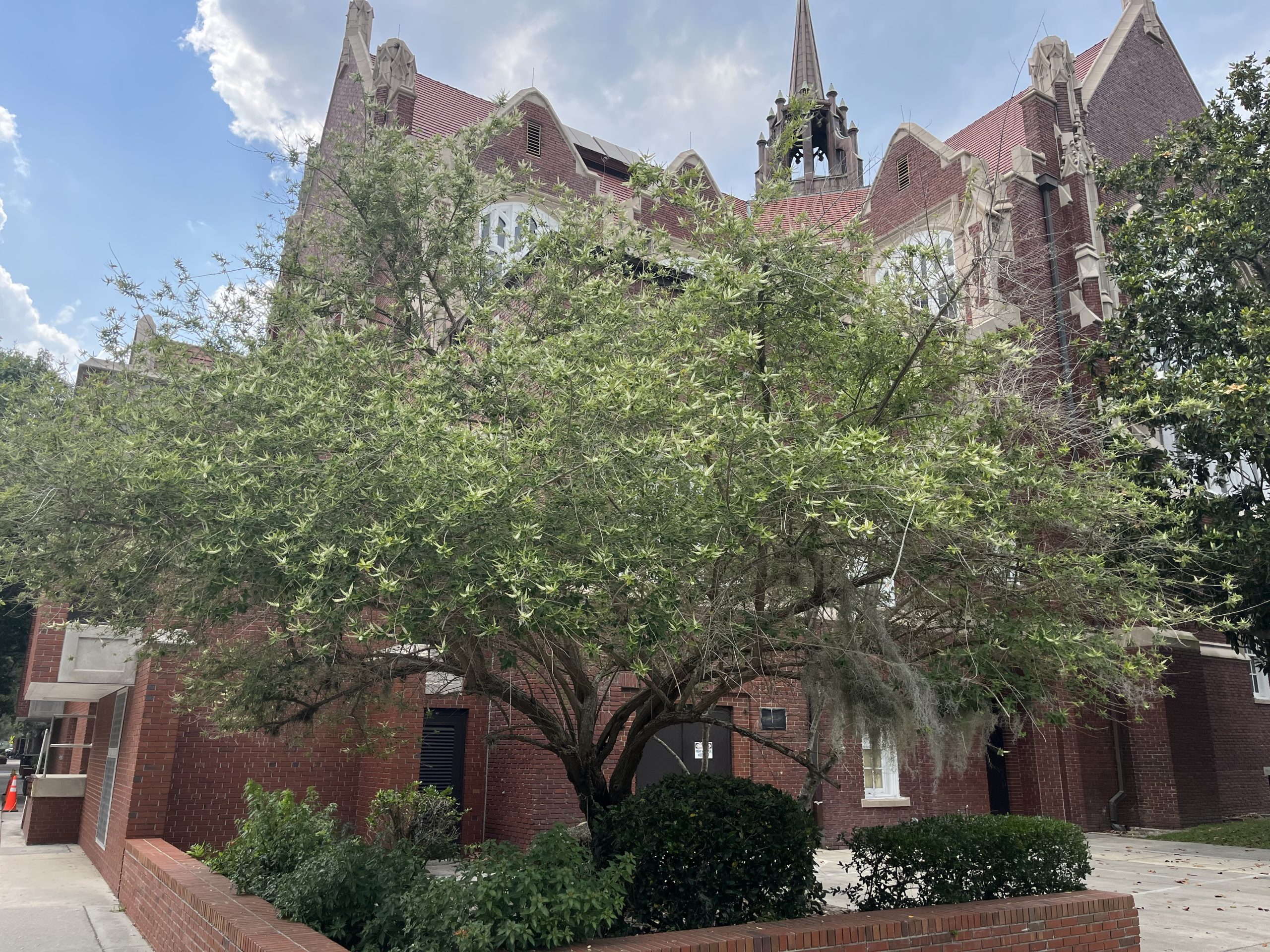
Like the chastetree, sweet almond, Aloysia virgata, isn’t a native plant, but don’t tell the native bees that. It has six-inch flower spikes that smell so amazing that people stop on the sidewalk near my house to smell them. While the flower spikes are large, the blooms are tiny so it attracts pollinators of all sizes, from monarch caterpillars and bumblebees to tiny native bees. As a bonus, it blooms most of the year.
In Florida, we get to celebrate Arbor Day twice – first in January as Florida Arbor Day and then again in April. Multiple events are on calendars across the Tampa Bay region. All tree giveaways are first come, first serve and proof of residency may be required.
Pinellas County National Arbor Day Tree Giveaway, April 19, 9:00 am – 12:00 pm. Learn more https://pinellas.gov/event/national-arbor-day-tree-giveaway/
Manatee County Tree Giveaway, April 22nd, 2023 from 9-2, Learn more https://blogs.ifas.ufl.edu/manateeco/2023/04/17/free-trees-2023-arbor-day/
Hillsborough County, Arbor Day Tree Workshop and Giveaway, April 23, 1:00pm to 3:00pm. Registration is required: https://www.eventbrite.com/e/arbor-day-tree-workshop-and-giveaway-tickets-1269189442789?aff=oddtdtcreator
City of Sarasota Tree Giveaway at The Bay, April 25- 26. Learn more https://www.thebaysarasota.org/event/city-of-sarasota-tree-giveaway-at-the-bay/2025-04-25/
City of St. Petersburg, 39th annual Green Thumb Festival, April 26-27. More than 120 vendors will offer a diverse selection of plants, and the city will give away 1200 pine seedlings and red pentas. Learn more https://www.stpete.org/news_detail_T30_R1386.php
City of Tampa, Mayor’s Tree Giveaway, April 26, registration is required, https://www.eventbrite.com/e/mayors-tree-giveaway-2025-tickets-1321591528839?aff=oddtdtcreator .
Originally published April 14, 2025