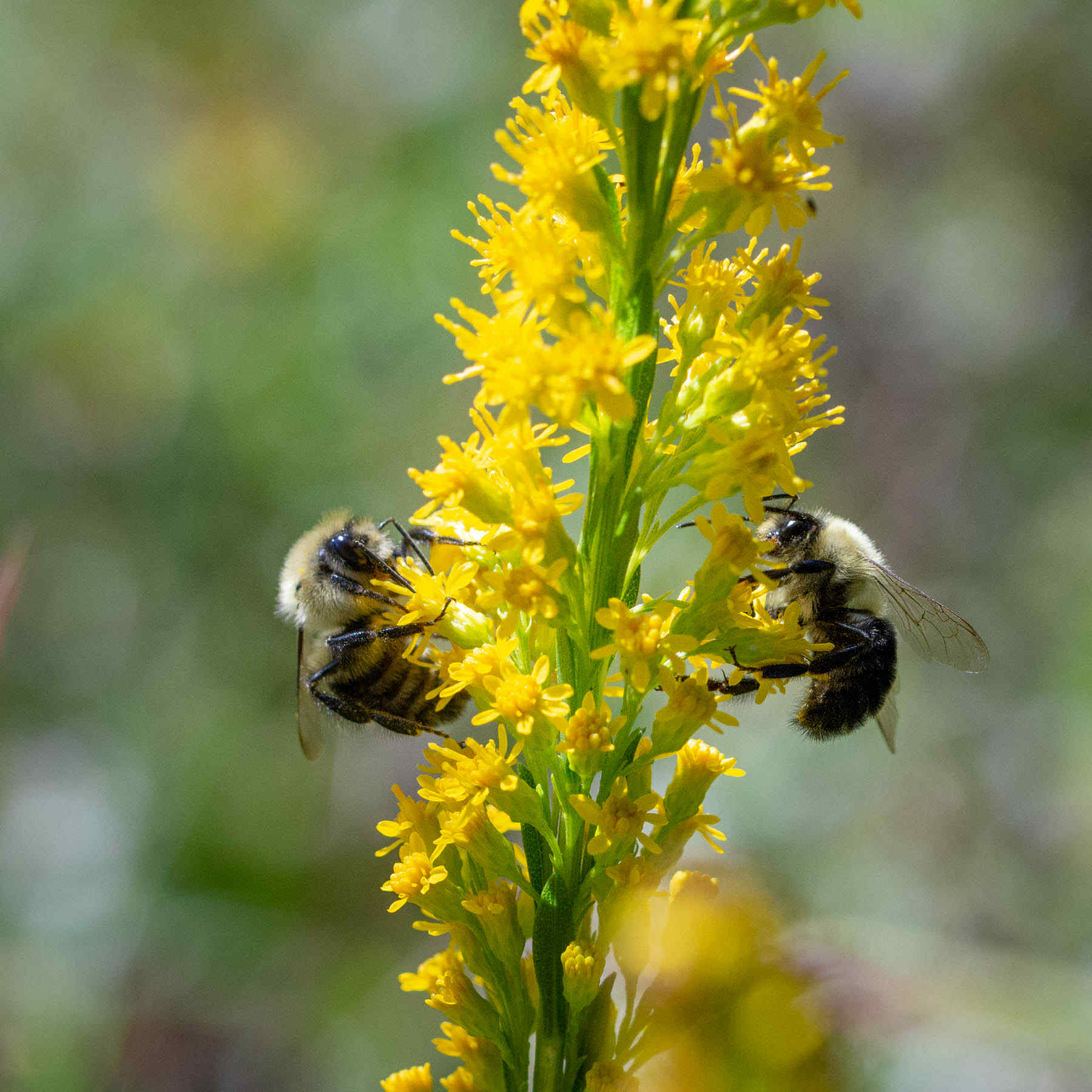
Across the country, beekeepers are reporting “catastrophic” honeybee colony losses. Closer to home, a Florida expert on native bees has noted either a decline in bees or changes in bloom cycles that would impact pollinators.
You don’t need to be an expert scientist to help determine how pollinators are faring in your yard or community, though. For the second year, citizen scientists across Florida are invited to the Great Southeast Pollinator Census on August 22 and 23. Last year, more than 18,000 people logged over 380,000 insect visits, providing scientists with data that tracks population trends of individual pollinators in a designated area over a defined time period.
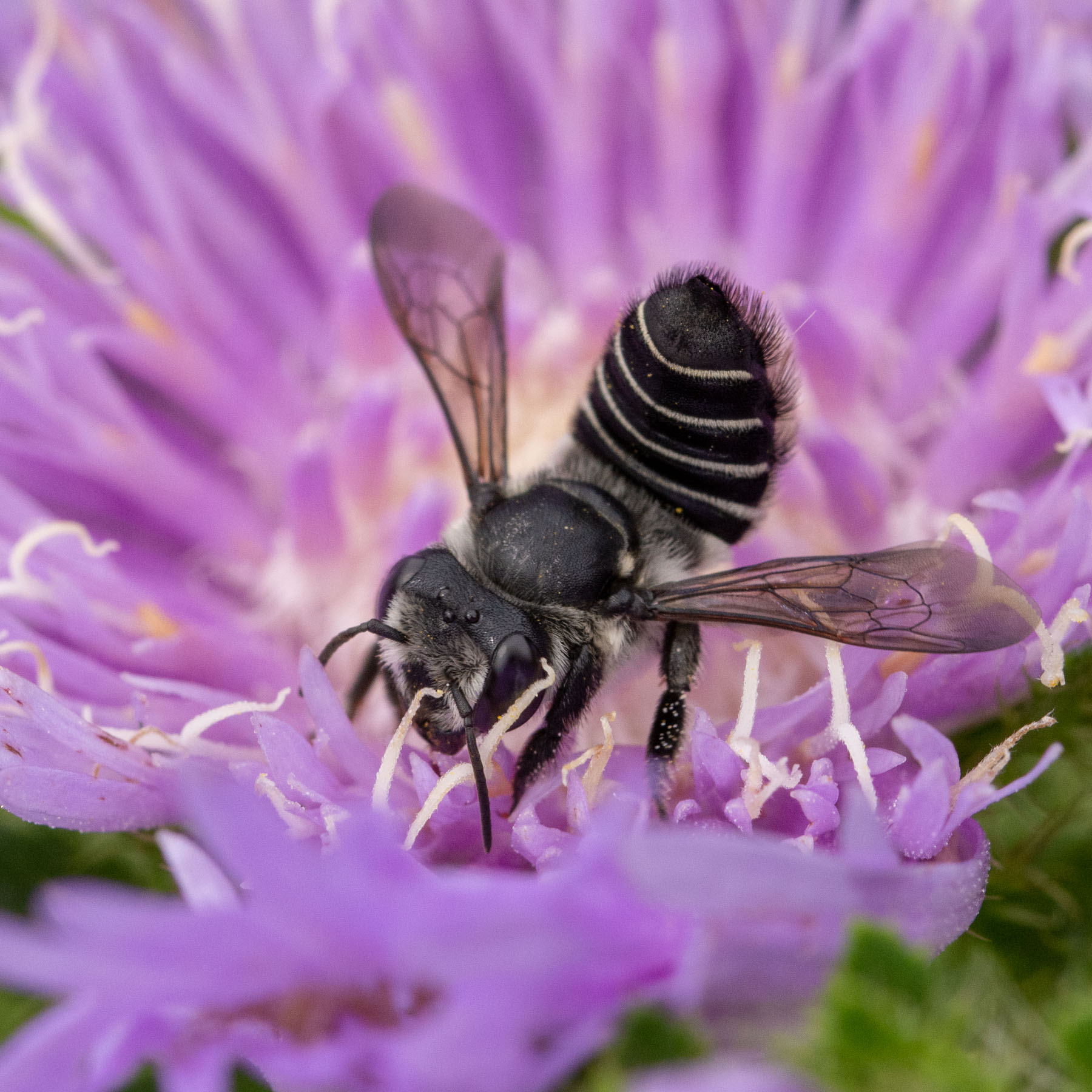
Organized by the University of Georgia, the pollinator count looks past honeybees to include native bees, butterflies and even wasps and other insects. And you can count pollinators at events scheduled in Hillsborough or Pinellas counties, or just set aside 15 minutes to observe a plant in your yard or a nearby park.
It’s designed to be easy to participate in, but organizers hope it will drive both scientific knowledge and enthusiasm among gardeners. Organizers provide insect-identification guides that are worth downloading even if you can’t participate in the census. With close-up color images, the guide details the differences between the pollinators you’re most likely to see in Florida. “We wanted the project to be easy enough for anyone to learn some basic entomology and participate while at the same time ensuring that we were generating useful data,” says Becky Griffin, the Georgia extension agent who helped start the census in 2017.
The census has three goals, she said:
- Create sustainable pollinator habitat by educating gardeners about plants that provide nutrition for pollinators while handling our summer droughts with minimal disease or pest insect pressure.
- Increase the entomological literacy of citizens. “We want participants to go from ‘oooo, it’s a bug’ to ‘look at the tarsal claw on that bee!’”
- Generate useful data about pollinator populations so researchers can spot trends, such as how pollinator populations are affected by weather and how honey bees influence native bee populations.
“Thanks to the census, we have gained a better understanding of what types of plants truly attract specific pollinators,” adds Jeremy Rhoden, the UF/IFAS agent leading the Florida census. “For example, red pentas are a well-known butterfly attractant plant. This is true because of the red color that butterflies are so highly attracted to, but we’ve learned that even more so than butterflies, wasps are attracted to red pentas.”
That knowledge could translate into a pesticide-free alternative to treating mole crickets – a major pest of bahiagrass lawns that are eaten by the wasps. “Could planting pentas within a landscape help to biologically control this pest species? “This now represents an opportunity for a research study to be conducted, which could result in fewer pesticides in our environment,” Rhoden said.
Even avid gardeners don’t often sit quietly and count insects for 15 minutes, so many are surprised at how many insects use their landscapes, Griffin said. The number and diversity of insects seen buzzing around their favorite plants is expected to encourage gardeners to grow more of the species that prove to be most attractive in their landscapes.
The emphasis on native bees will also provide data on which plants they prefer and encourage gardeners to support the 300 species of native bees found in Florida. Like European honey bees, Florida’s native bees play an essential role in pollinating crops and their ecosystems, but the majority of them nest in the ground and not in hives, so it’s not as easy to track populations.
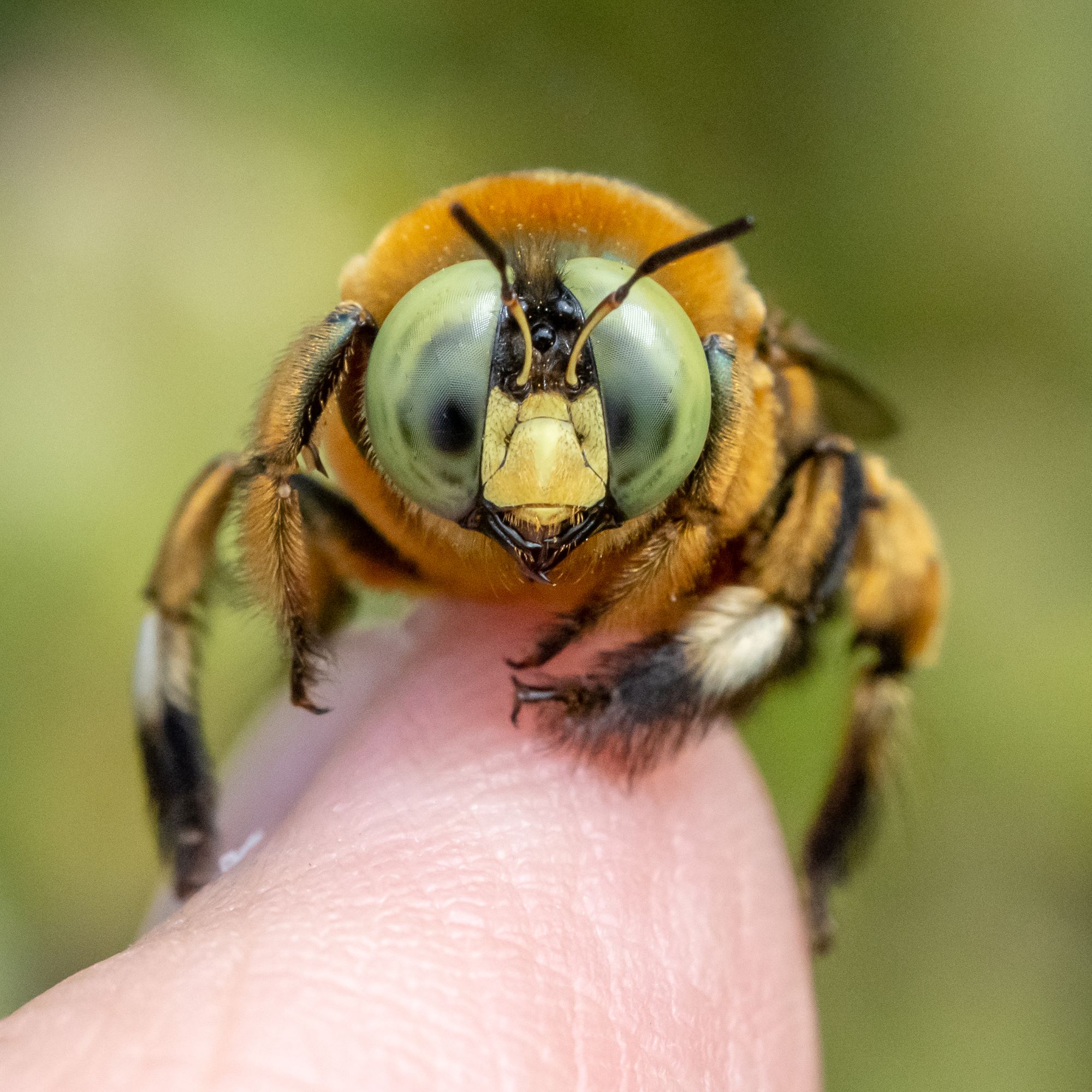
“Ongoing development in Florida is cause for increasing concern about the long-term effects on native bees,” said Laura Langlois Zurro, who writes extensively about native bees and their decline. “With bumble bees especially, I’ve been wondering if some of the changes I’m seeing might be tied to habitat loss at a very local level.”
For instance, if a site that previously supported overwintering bumble bee queens that nest underground is cleared, those multiple solitary queens may never have had the chance to emerge and establish new colonies the next season. “Since each queen is on her own to find a nest site and start a colony, losing those safe overwintering spots—even just in one small area—can create a noticeable impact the following year. We really need to keep expanding awareness about them and how small changes—like planting in containers or swapping out a patch of turf—can support them, even in the middle of an HOA.”
Supporting pollinators is a small way to make a huge impact. The Great Southeast Pollinator Census is designed to inspire people to create sustainable pollinator habitats at home and in their neighborhoods.
P.S. – The Larra wasps known for destroying mole crickets will not sting humans unless they are caught and held in your hand. They’re solitary insects and have no nest to defend, so it is more beneficial for them to flee than to sting.
By Vicki Parsons, originally published Aug. 11, 2025