
First, the good news: most Tampa Bay residents don’t need to worry about PFAS (Per- and polyfluoroalkyl substances) in their drinking water. Tampa Bay Water’s ongoing tests show that its drinking water meets even the stringent new EPA regulations in nearly every case.
But that doesn’t mean you should lower your guard. PFAS, commonly referred to as “forever chemicals,” could also be called “everywhere chemicals.” They’re found in everything from firefighting foam and furniture to fast-food wrappers and fingernail polish because their chemical bonds make them incredibly strong and water-resistant. And then when they’re discarded, they remain in the environment, contaminating soil, air, and water for decades.
The Centers for Disease Control and Prevention (CDC) has reported that PFAS are found in the blood of 97% of Americans, although that number has dropped since 1999 as manufacturers began limiting their use of the chemicals. And while research on the impact of PFAS on human health is not yet definitive, scientists have linked them to an increased risk of kidney and testicular cancer, as well as potential links to other cancers. They may impact human immune systems and lower the effectiveness of some vaccines. Additionally, some research shows that they may beendocrine disrupters and are associated with increased cholesterol and liver damage.
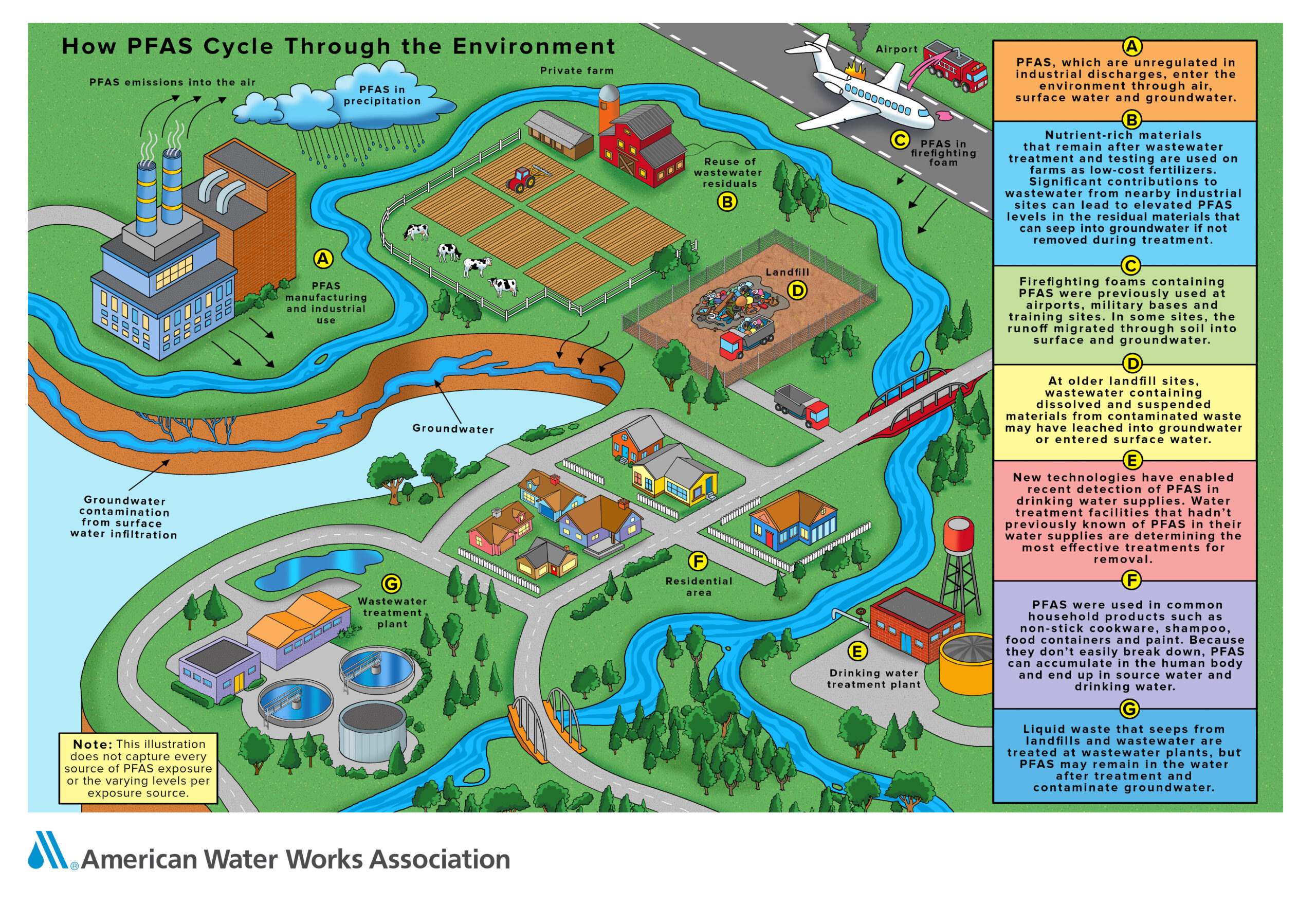
Avoiding the chemicals entirely is nearly impossible, but there are steps you can take to minimize your exposure to them. Manufacturers, including DuPont and 3M, have reduced US-based production of PFAS as they face legal challenges. One such challenge resulted in a $13.6 billion settlement for contaminating public water systems across the country, including Tampa Bay Water, which received $21 million to continue testing for PFAS and to build treatment facilities if necessary.
If you’re a fisherman, or eat fish as your primary source of protein, be aware of the fish most likely to carry PFAS. Researchers at the University of South Florida’s College of Marine Science in St. Petersburg report that the highest concentrations of PFAS pollution were found in Old Tampa Bay and Hillsborough Bay. The fish with the highest concentrations of PFAS in their tissues were those that live on the bottom, such as catfish, and predatory fish such as jacks, sea trout and ladyfish.
PFAS are found in most kitchens. Experts recommend retiring your older non-stick cookware and replacing it with cast iron, stainless steel or ceramic. Coated cooking utensils also should be discarded, according to the Environmental Working Group. Some, but not all, black plastic utensils contain very high levels of flame retardants, however it’s difficult to tell which items contain PFAS.

Until 2024, “grease-resistant” packaging, particularly fast-food wrappers, pizza boxes, and microwave popcorn bags, could contain PFAS. A years-long effort coordinated by the FDA, working with manufacturers, led to the voluntary phase-out of packaging that contains PFAS, but beware of older packaging.
ForTampa Bay Water customers trying to avoid PFAS by drinking bottled water instead of what comes out of the tap – don’t. While tests show that PFAS are present in many bottled water brands, Tampa Bay Water consistently meets the EPA goals. If you must drink bottled water, consider using purified water rather than spring water because the purified water is typically treated with reverse osmosis, which removes PFAS.
Watch out for clothing with properties like water-resistant, wrinkle-free and stain-repelling, which are often bywords for PFAS, particularly in older clothing. Manufacturing clothing with PFAS has been banned in some states (not Florida), although some experts predict that manufacturers will voluntarily reduce their use in other states. Some companies, including Levi Strauss, H&M, Patagonia and Zara, have already committed to removing “intentionally added” PFAS to their products.

Washing clothes with PFAS will not remove all of the substances, and what is removed will likely end up in nearby waters. Wastewater treatment plants are designed to focus on organic matter and pathogens, not the stable chemical bonds that PFAS are made from. The washed-away PFAS often end up in nearby surface waters, or have been concentrated in sewage sludge that can be used on farmlands.
The same beneficial properties in clothing mean that PFAS are found in furniture, including both cloth and leather goods, although manufacturers are phasing out their use. Experts recommend searching for labels and “PFAS-free” certifications.
Watching labels is important in cosmetics where PFAS may play a role in creating long-lasting or waterproof mascara, foundation, nail polish and lipstick. Again, the key is reading labels – look for ingredients that contain “perfluor” or “fluoro.” The FDA also lists these as common ingredients to watch for: polytetrafluoroethylene (PTFE), perfluorononyl dimethicone, trifluoroacetyl tripeptide-2, tetradecyl aminobutyroylvalylaminobutyric urea trifluoroacetate, perfluorohexylethyl triethoxysilane, methyl perfluorobutyl ether, and methyl perfluoroisobutyl ether. Their December 2025 report, however, notes that there are significant gaps in reports on concentration and data on absorption rates and dermal toxicity.

If you followed recommendations from an insurance company and purchased fire extinguishers, check the label on them, particularly if they’re older. Unless they specifically say “fluorine-free,” assume they have PFAS. New fluorine-free formulas are available now for homeowners, boaters, and the military.
It’s nearly impossible to totally avoid PFAS, but you can significantly reduce your exposure to the substances by making conscious choices. Your kitchen is probably your primary source of exposure, although choosing clothing and cosmetics carefully can also make a difference.
By Vicki Parsons, originally published January 22, 2026