When Damon Moore started Oyster River Ecology (ORE) in 2023, he ran the numbers he’d need to restore the Manatee River’s once-bountiful oyster reefs. Using rip-rap, the least expensive alternative, it would cost at least $650,000 an acre to create about 100 acres of reef. “We needed to find something cheaper than rocks,” he said then.
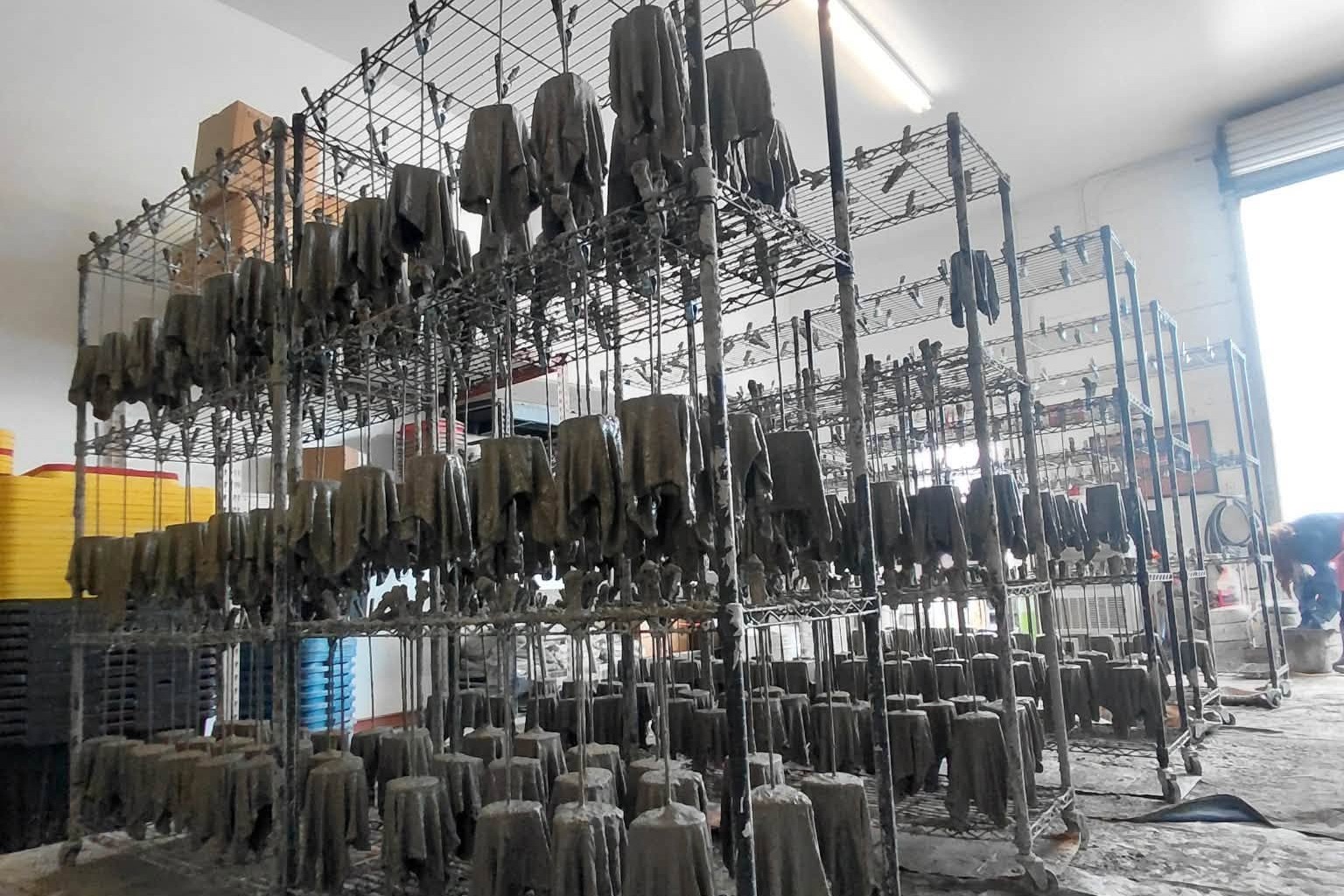
That “something” evolved from dozens of prototypes tested in his backyard. The design that best balanced oyster growth and cost was oyster rag pots, affectionately referred to as ORPs, inspired by crafty concrete pots for plants and made with towels soaked in concrete hung upside down to dry. The first ORPs went in the Manatee River in April 2024.
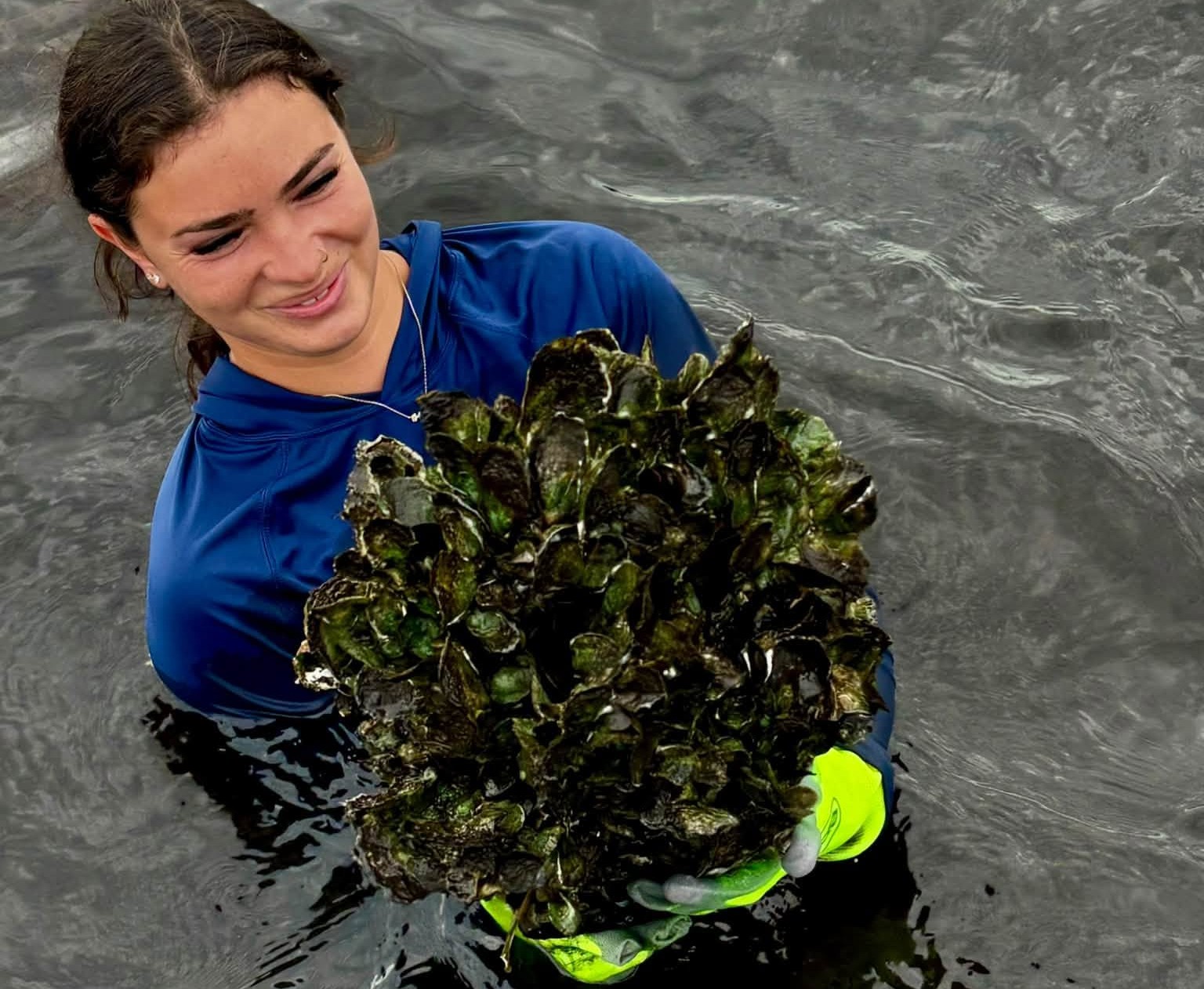
Today, ORE is now averaging more than 5,000 installations per month and the results have been remarkable. According to ORE’s monitoring data, each ORP supports an average of 101 oysters after one year in the water. Using a conservative filtration estimate of just 5 gallons per oyster per day (although lab-based observations report 50 daily gallons of filtration per oyste)r, each ORP has the potential to filter approximately 505 gallons of water daily. Collectively, the 62,000 ORPs installed to date can filter more than 31 million gallons of water every day.
And ORE is just getting started. The organization already holds permits to restore 10 acres of oyster reef in the Manatee River, enough space for 435,600 ORPs. These restoration sites were carefully selected for their favorable conditions, where food is abundant and oyster predators are relatively scarce, giving the developing reefs an excellent opportunity to thrive.
Coming soon to a park near you!
And they’re not satisfied with just the Manatee River. ORE recently secured approvals to restore five acres of oyster reef off Phillipe Park in Safety Harbor, offering volunteers a new option beginning in November. “Because the shoreline is so accessible, we’ll be able to handle really large volunteer groups that can basically form a chain of people to get the ORPs in place,” he said. “As far as volunteer engagement, this is going to blow people’s minds because nearly everyone will be able to participate without having a kayak.”
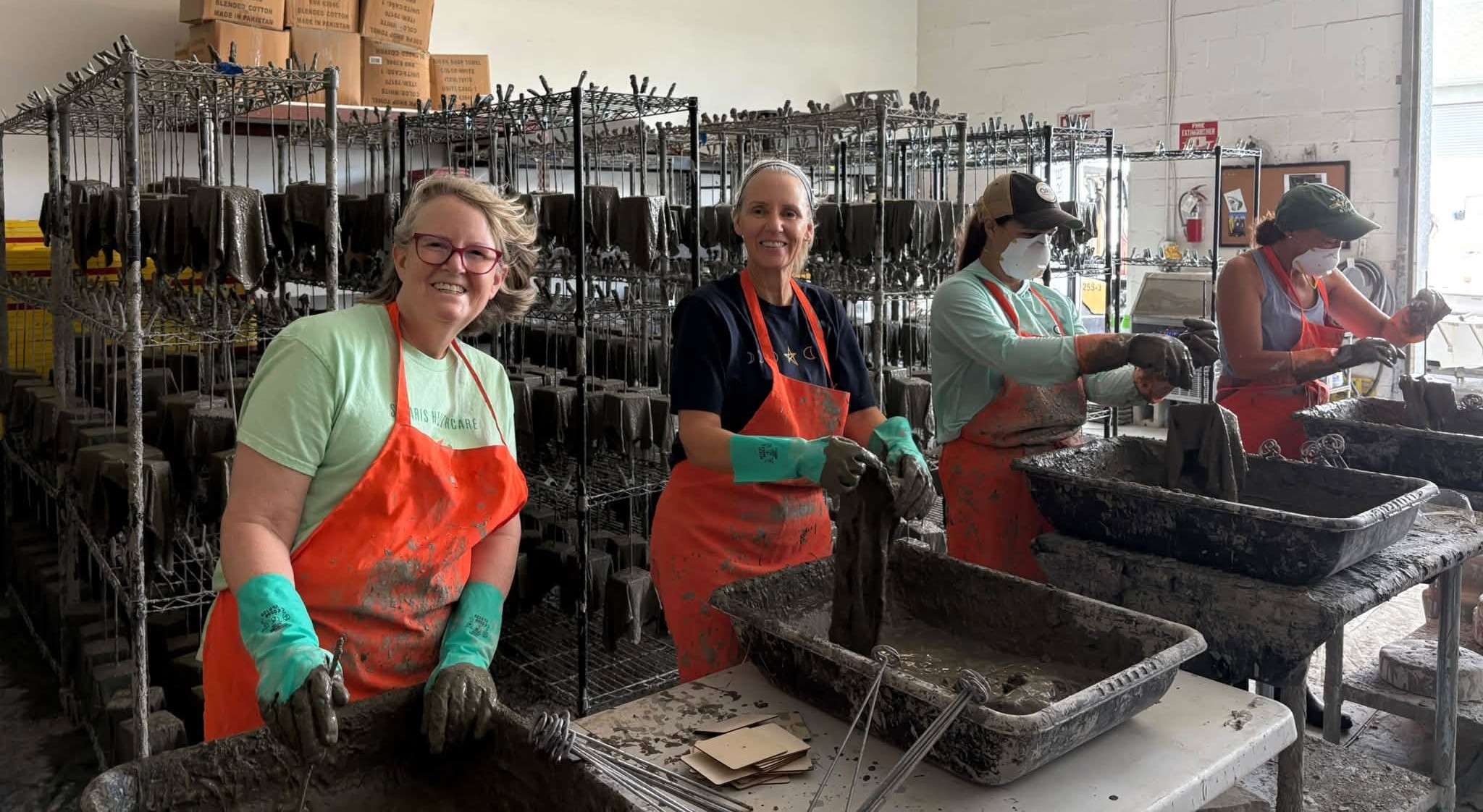
The biggest bottleneck is making the ORPs, which typically happens in ORE’s Palmetto facility. “It doesn’t take a lot of skill because it’s basically a crafting project,” he said. “The difference is that ours are all very standardized so we can mass produce them.”
About 10 people working together can make about 450 ORPs in less than two hours, which is about the time most volunteers start to run out of steam. They dry on racks for 24 hours before they’re carefully placed in bins and loaded onto specially made barges to be pulled behind ORE’s boat or trailer
Rag Pot Rumble underway now
“We do a lot of community events, and now that we’re so involved in Pinellas County, we hope to see more volunteers from there,” Moore said. Their latest effort is a competition for groups, the Rag Pot Rumble, with the winner receiving a Golden Rag Pot. “We want to make it fun. It’s something that companies can do, or school or sports clubs, or just a group of friends who want to make a difference.”
The first participant in the rumble was Cynthia Grizzle and her team from Artemis Consulting Collective, Inc. “We jumped at the opportunity to help out,” she said. “It was a great team-building exercise that will make a big difference in Tampa Bay.”
Her team of seven completed 457 ORPs in 90 minutes, setting a high bar for other teams to exceed. “It wasn’t hard to get to Palmetto – it was right off the interstate. We had fun as a team and then went out to dinner, even though we were pretty dirty.”
Grizzle’s office is just around the corner from Phillippe Park, so they’re looking forward to the upcoming installation day to get their ORPs in the water. “As environmental consultants, we know how important oysters are to restoring Tampa Bay. We’ll be helping out in any way Damon needs us.”
Keep an eye on ORE’s social media pages and website for volunteer opportunities.
https://oysterriverecology.org/get-involved, or follow them on Facebook at https://www.facebook.com/OysterRiverEcologyInc
By Vicki Parsons, originally published Oct. 26, 2026