An explainer on the Bay Area’s current conditions
By Kristina Meek
“How are we still in a drought?” you ask, dripping wet from the pop-up storm in which you just got caught. It may feel like a contradiction to be talking about watering restrictions as we wind down Florida’s rainy season. And yet, watering restrictions, which affect homeowners and businesses, were just extended to March 31, 2027 for much of west central Florida. While all property owners need to be aware of these to avoid fines, they’re not top-of-mind for many residents.
It’s understandable to wonder where these restrictions come from and even to be confused about the current drought status, when it might feel like it has ended. And what about this “Godzilla El Niño” we keep hearing about? To better orient ourselves to where we are in all this, it may help to look back at how we got here and hear from an expert about what we might expect going forward.
The Drought in Fall 2026
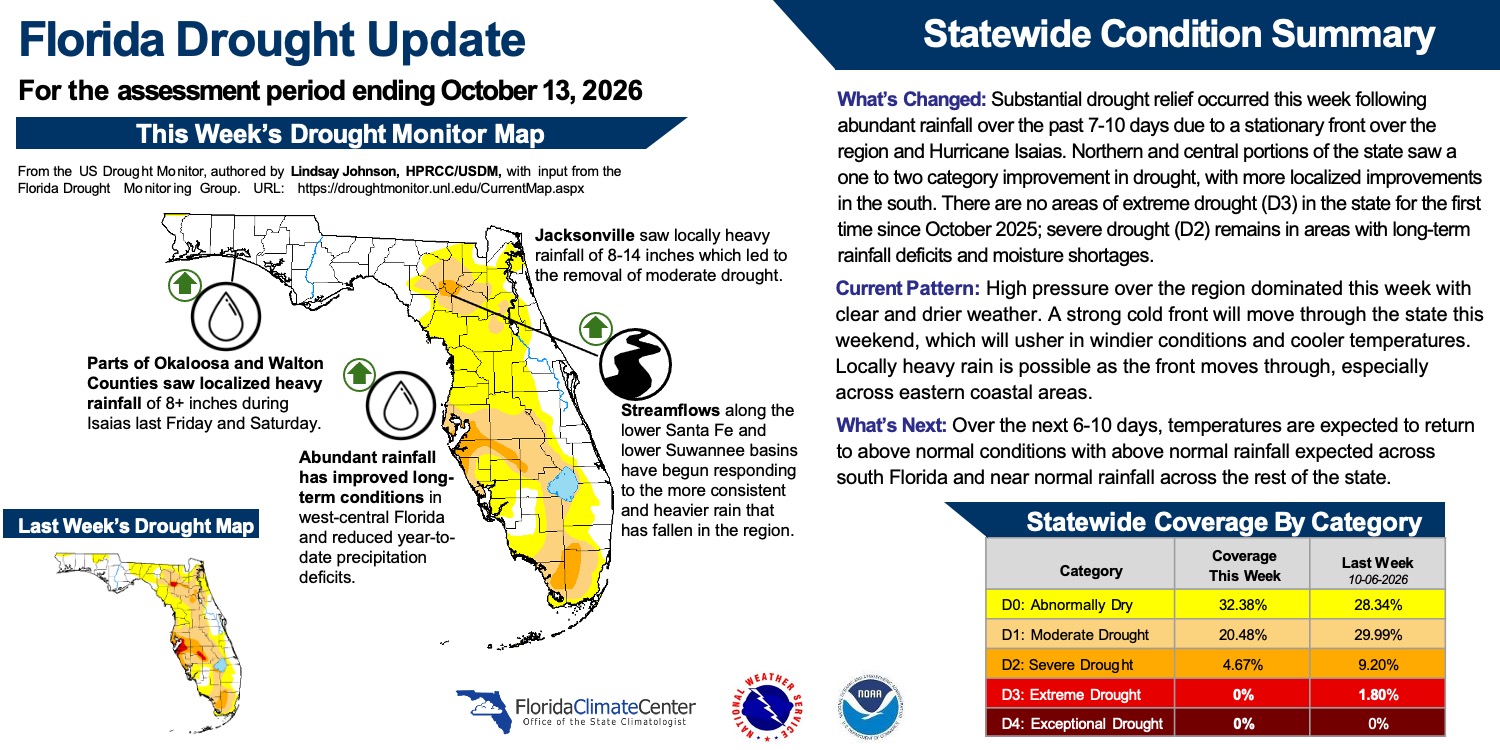
Anyone can access drought status maps, updated every Thursday by the National Oceanic and Atmospheric Administration (NOAA). As of mid-October, most of the state still fell into one of the five categories of drought, from “abnormally dry” to “extreme drought.” Even after all the rain, , most of the state is still is still in a drought or abnormally dry.
The situation has improved in recent months. Since June, no area meets the criteria for “exceptional drought,” the most severe level. We are headed into the dry season, which generally means less rain, and then hurricane season ends November 30, meaning less threat from an already quiet period in the tropics.
A drought is more than a lack of rainfall, however. Soil moisture, reservoir levels, runoff, and a number of other factors figure into decisions about how to collectively conserve our resources.
Who Sets Water Restrictions?
Florida has five water management districts monitoring water supply and quality. State law requires each district to develop a Regional Water Supply Plan every five years that tries to figure out how water demands will change with the population.
If you live in west central Florida, including the Tampa Bay area, your guidance comes from Southwest Florida Water Management District, or SWFWMD (pronounced “swiff-mud”). SWFWMD is currently under modified Phase III “Extreme” Water Shortage restrictions due to long-term drought.
Though you may learn about restrictions directly from your city, county, or homeowner’s association, they are not the ones making the determination. Cities or counties may, however, set watering schedules, hours, and fines. Each property owner should look up their own watering day on their local government’s webpage.
What Exactly is a Phase III Water Shortage?
Water shortages have four phases: Moderate, Severe, Extreme, and Critical. The current Extreme/Phase III shortage results from reduced precipitation during the rainy seasons of 2025 and 2026. This status limits how often homeowners can water yards and wash cars at home, and sets guidelines for things like decorative water fountains. It also requires restaurants to serve water only upon request and restricts watering on golf courses. You can find a complete list of restrictions on SWFWMD’s website.
The “persistent low-flow conditions,” as SWFWMD describes them, “will lead to surface water supply exhaustion if low-flow conditions persist.” The last time the West Central region had a Phase III shortage was 2017.
This marked the second year in a row with below-average rainfall. Florida began the 2026 rainy season already with an 11-inch “rain debt.” Meteorological summer ended August 31, with some spots in the state recording a debt of nearly 15 inches.
Bob Bunting of The Climate Adaptation Center in Sarasota points out that when rain did fall in 2025, it fell on abnormally dry soil, which doesn’t allow water to penetrate and percolate into underground storage.
Without enough rain to refill them, public reservoirs sit below capacity. For example, the C.W. Bill Young Regional Reservoir in Hillsborough County was at about 11.32 billion of its 15.5 billion-gallon capacity as of October 15 as we enter the typically dry winter season.
What Qualifies as Long-term Drought?
A drought qualifies as long-term when less-than-normal precipitation persists for more than six months. Keep in mind that, in Florida, “normal” looks quite different depending on the time of year. Periods of heavy rain and even tropical storms can take place during a drought, but the key is the impact over time. This situation is also called a hydrological drought, or a drought that impacts surface and subsurface waters.
Even short-term droughts, or meteorological droughts lasting a few weeks or months can affect drinking water supplies, agriculture, and wildlife. Many of these results are highly visible. With long-term drought, both the results and the recovery can take time to become apparent.
Long-term droughts have far-reaching effects. Water supplies for agriculture, drinking water, hydropower production, navigation, recreation, and natural habitats can all suffer. When water utilities have to increase groundwater pumping to meet demand, they can deplete aquifers. This can cause severe environmental damage, as seen in the “water wars” of the 1970s.
But you need only look out the window to see that plants suffer during a drought (some species more than others). Plant damage from both lack of rainfall and lack of soil moisture affects food for humans and wildlife. Crops and forage can suffer, and plants can die. Animals who rely on plants for food and for the water stored in those plants also suffer in turn. Dry plants also are more likely to burn and increase the threat of wildfires.
Forecasting the Future
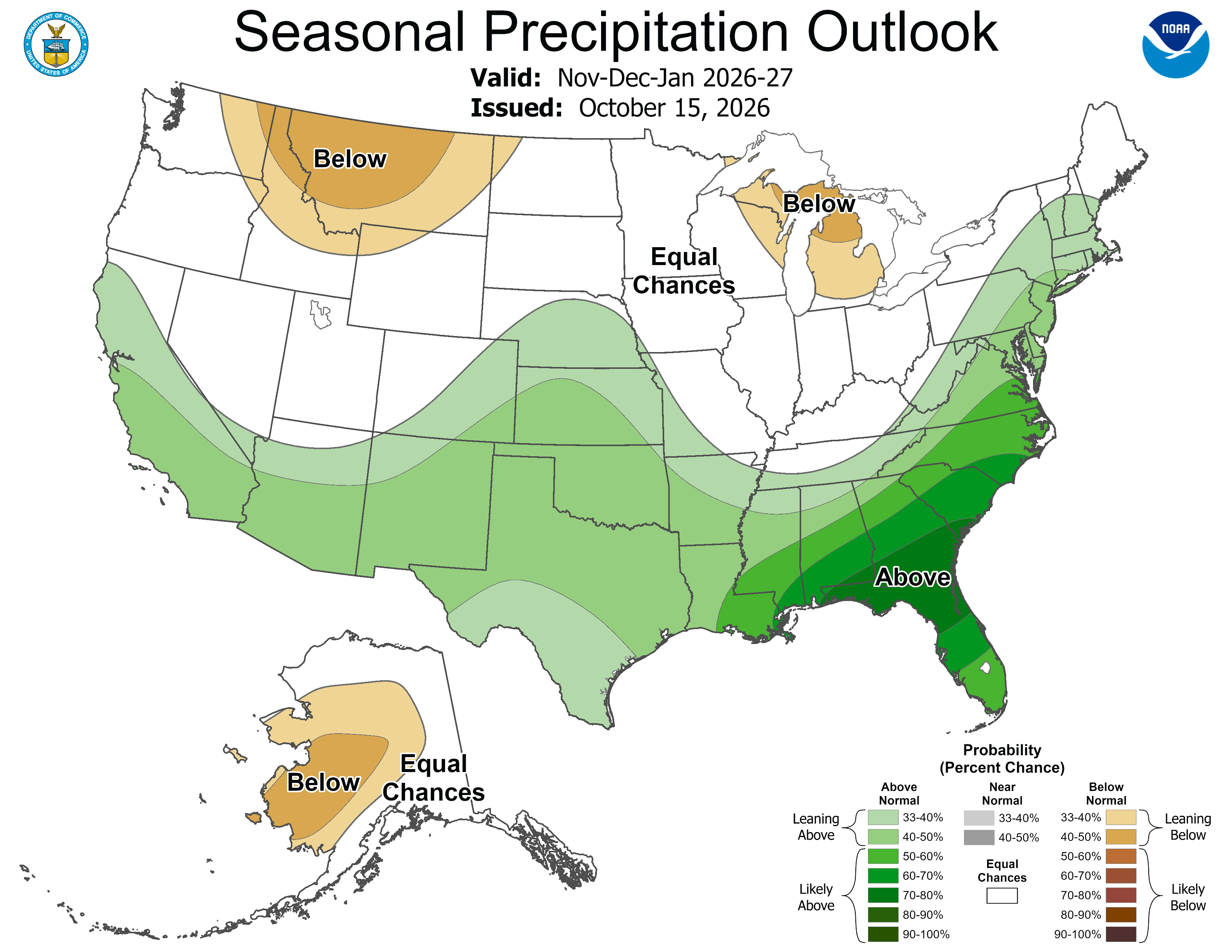
As fall progresses to winter, we’re in a favorable pattern to replenish our water supplies, says Bunting. He says it’s reasonable to expect the drought to end within six months — with a major caveat: While this particular drought will end eventually, Florida’s water woes will not.
Bunting emphasizes that the strain on water resources in the state is two-pronged: a changing climate and a growing population.
“We’re now supplying water to millions more people than we used to,” he points out. “There are limits to how many people [the current system] can serve and how the infrastructure can deliver the water. The systems in place were not built with the current climate or population in mind.”
The very strong El Niño that’s ramping up has suppressed tropical storm conditions but bodes well for wetter winter conditions. Bunting shares that the last eight significant El Niños have given Florida a much wetter than average fall and winter.
In their seasonal drought update, NOAA’s Climate Prediction Center reports that “Seasonable wetness favors a gradual reduction in drought coverage, but the potential for reduced Atlantic tropical cyclone activity may make drought slower to ease across portions of the region.” Even a wet season could mean a slow recovery, which is why the current restrictions continue through March of next year.
What Can I Do in the Meantime?
If you’re looking at your yard and wondering how to cope with watering restrictions, there are a few ways to empower yourself. First, bookmark the FSU Climate Center and check for weekly rainfall and drought updates.
It’s a great time to plan your landscaping strategy for next year. Talk to a nursery or gardening expert about what native and/or drought-tolerant plants are best to plant during the cooler months ahead. You may save yourself the need to water as aggressively in the future. Note that more frequent watering for new plants may be permitted before 8 a.m. or after 6 p.m. under the current watering restrictions.
Check with your county or municipality to learn whether reclaimed water is available in your neighborhood. Using reclaimed water for irrigation can save money and reduce the need for fertilizers. Water restrictions may be less stringent for reclaimed water.
If you’re irrigating your landscape, consider switching traditional, water-hogging sprinkler heads to low-flow drip irrigation, which may also have less stringent restrictions but must occur before 8 a.m. or after 6 p.m.
These are all ways to not only cope with the current restrictions, but to prepare for the future. “The changes we’re seeing are not going away,” says Bunting. “Using less water is a climate adaptation.” Beyond personal adaptations, individuals can speak up for broader change. “Communities have to get together and be active in making sure water use management is well understood by the cities they live in.”
Kristina Meeks is a freelance journalist, environmental educator and Florida Master Naturalist in St. Petersburg.
Originally published October 19, 2026