
American white pelicans are clearly related to our native brown pelican, but their enormous size, stark-white plumage and tendency to travel in large flocks make them a show-stopper for nearly everyone who sees them when they return to Tampa Bay in the late fall.
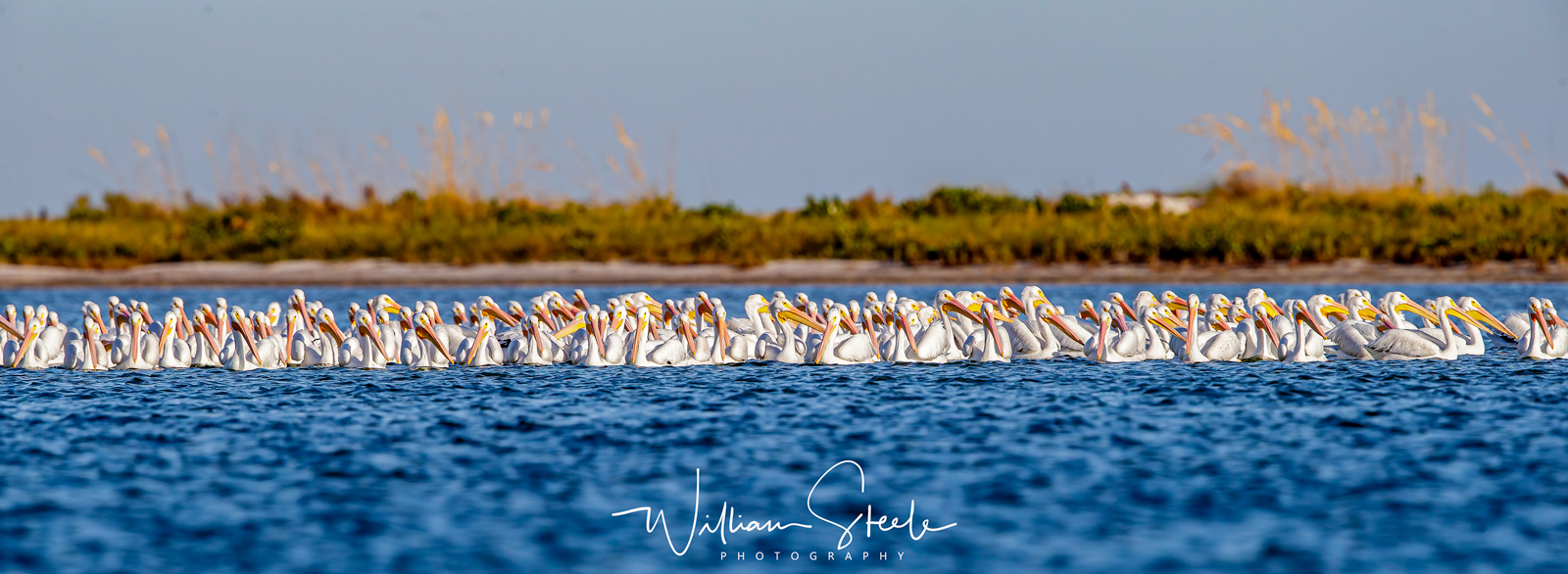
Weighing up to 30 pounds with wingspans extending up to nine feet, white pelicans are among the largest birds native to North America. They nest in colonies of 5,000 birds near brackish or freshwater lakes in isolated areas from Manitoba, Canada and Minnesota west to northern California. Most populations migrate southeast and southwest to bays and estuaries in coastal lowlands for the winter. Some nonbreeding populations will remain in those coastal areas, especially in Florida.
Unlike brown pelicans, which capture prey by diving into the water, white pelicans are more likely to “herd” fish. Working in groups of a dozen or more – and sometimes assisted by other species – the white pelicans corral fish into a small area where they are easier to eat.

Once the fish are concentrated, the pelicans use their pouches as fishnets, submerging their heads and necks to scoop up the fish. They’re voracious eaters – each consuming about four pounds of fish daily – so they typically swoop into a pond, catch the easy prey and then continue to better spots. They’ve even been known to steal food because they’re large enough to bully smaller birds.
White pelicans can be seen in many locations across Tampa Bay, from Fort DeSoto Park in Pinellas County to ponds in suburban Hillsborough, and even occasionally at Tampa’s urban Riverwalk.. They historically roost at Tarpon Key near Fort DeSoto and can be seen there most evenings and early mornings between October and February.
To learn more about the latest sightings of white pelicans, visit https://ebird.org/species/amwpel/US-FL-103, although the app is actually most effective on your phone not a computer, according to Mic McCarthy, field trip chair for Tampa Audubon Society. “Using the eBird app on your phone lets you immediately see where your target bird was seen most recently, and then if you have Google maps installed, it will give you directions to get there,” he said.
By Vicki Parsons featuring images by William Steele, originally published October 29, 2025