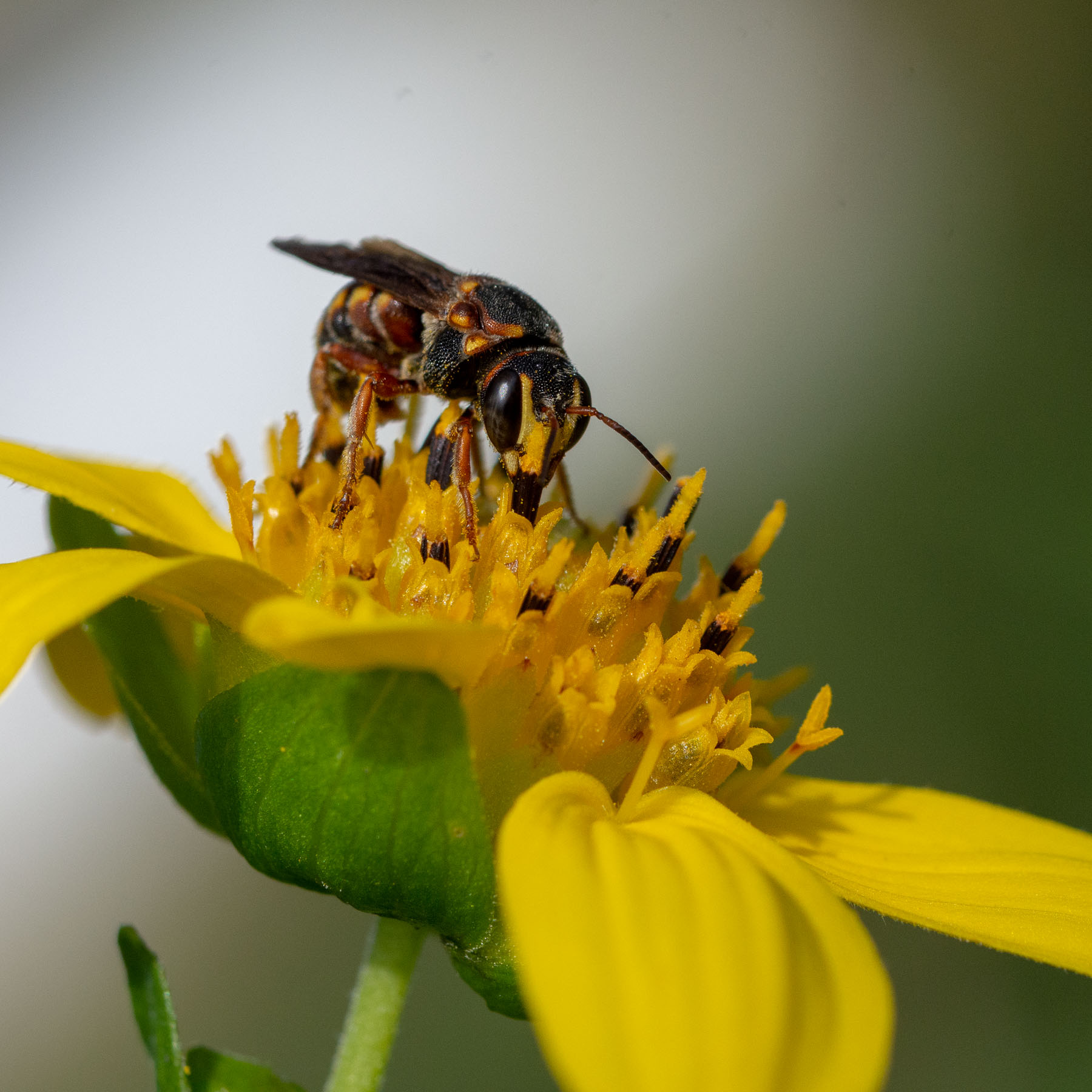

Story and photography by Laura Zurro
Most conversations about saving bees focus on honey bees. But Florida is home to more than 300 species of native bees, each playing a unique role in pollinating the plants that feed our ecosystems — and us.
Sadly, their numbers are dwindling. A 2025 report from NatureServe and the Xerces Society found that nearly 35% of native bee species in North America are now at elevated risk of extinction. As development continues to shrink their natural habitat, our home gardens can make a critical difference to their survival.
How can we help?
Honey bees spend their winters sheltered in warm, protected hives, but native bees rely on what they find in our gardens to survive. To produce the next generation, native bees must be able to successfully forage in the fall and then overwinter safely. As a result, what we do — and don’t do — in our gardens during fall and winter can directly impact their survival.
What looks like a dried bloom stalk or messy patch of ground might be sheltering the next generation of pollinators. By leaving parts of the garden undisturbed and adding wildflowers that bloom into fall, you can provide bees with the habitat and food they need to survive until spring.
You can make a BIG difference.
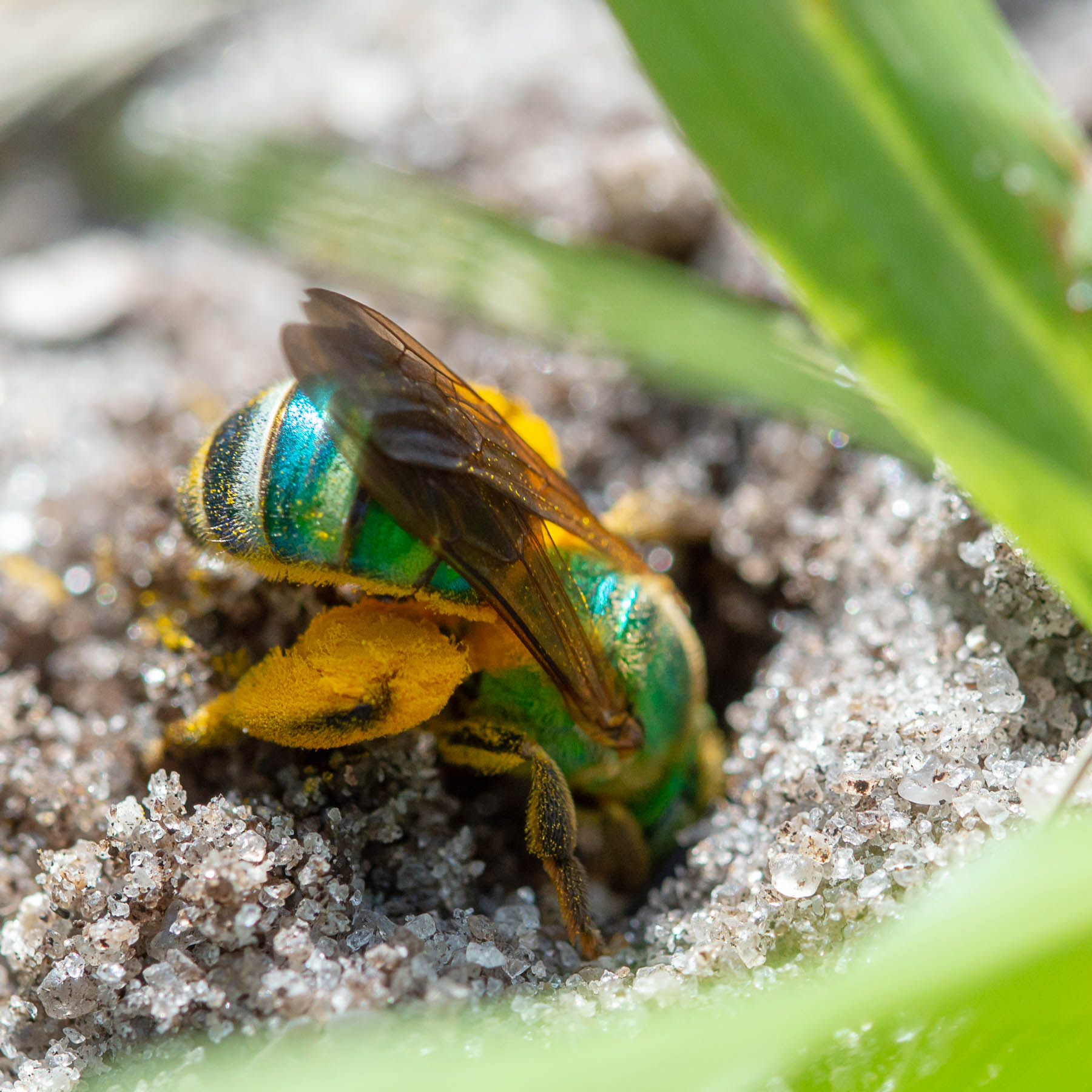
Don’t Dig It Up — Bare Soil Could Be a Bee Nursery
More than 70% of Florida’s native bees nest in the ground. The ground they choose for nesting sites varies by species and can include lawns as well as bare areas with hard-packed or sandy soil. Even a small patch of dirt can host a bee nest, so the best habitat for ground-nesting bees is simply an area left undisturbed.
To show just how varied their life cycles can be, here are four examples of Florida’s many ground-nesting native bees: the brown-winged striped sweat bee (Agapostemon splendens) remains active year-round when flowers are available and can produce two generations — one in spring and another in fall.
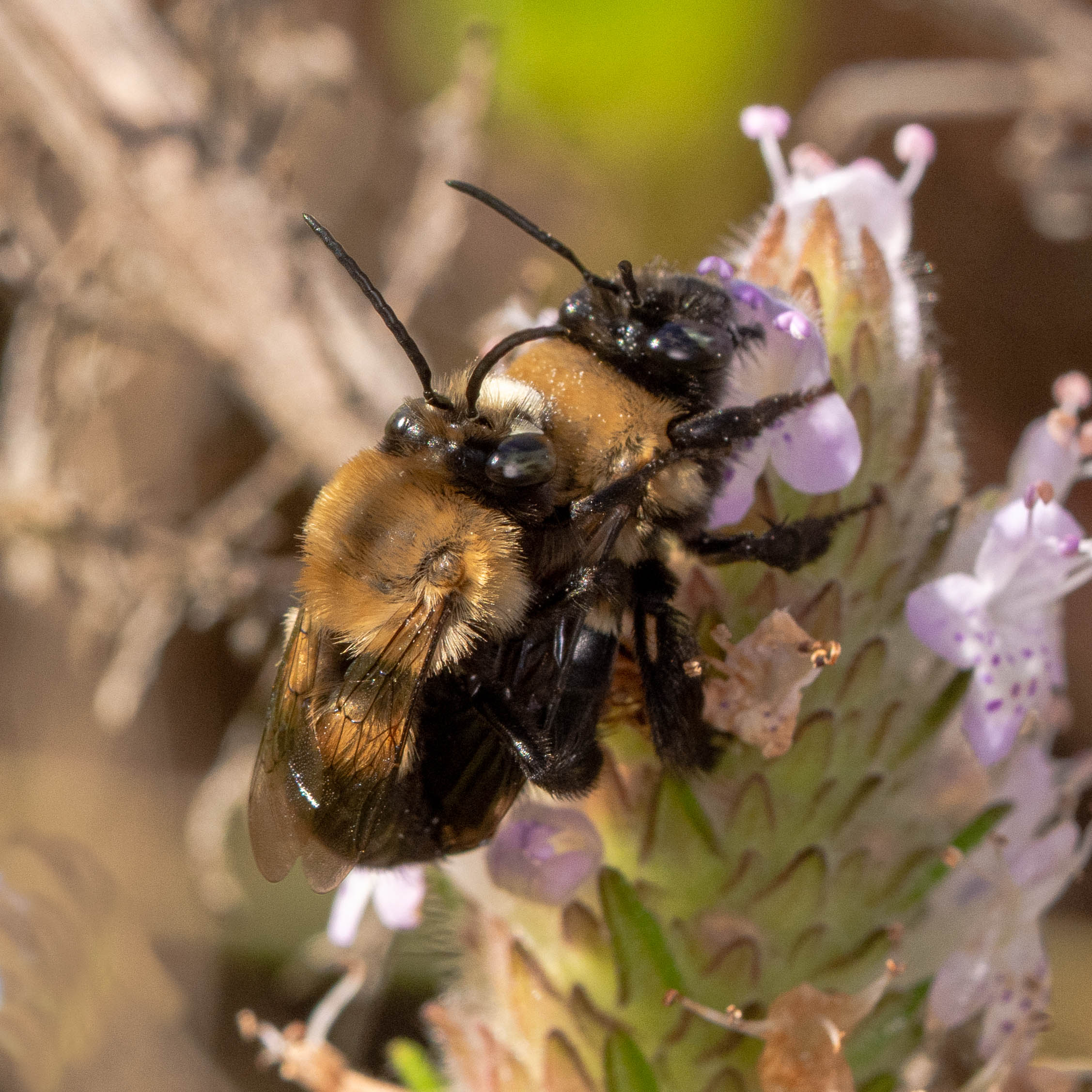
The southeastern blueberry bee (Habropoda laboriosa) nests in late winter to early spring, with offspring remaining dormant in the soil until the following year. The brown-winged mining bee (Andrena fulvipennis) creates nests in fall with young that won’t emerge until the following fall and Poey’s furrow bee (Halictus poeyi) can produce two to three generations between late winter and early fall.
This makes fall cleanup a critical time to pause and consider what lies beneath. If you’re laying or refreshing mulch in fall, avoid thick layers or heavy wood chips. Instead, opt for pine straw, fine pine mulch, or compost — all of which allow oxygen and moisture to reach the soil, reducing the risk of smothering overwintering pollinator nests. Common fall practices like applying dense mulch, laying weed fabric, or even vigorous raking can wipe out entire generations of ground-nesting bees and other insects, preventing them from emerging the following season.
With nests scattered across the landscape, pinpointing exact locations is difficult. However, the goal isn’t perfection, but reducing harm. Even small changes to fall mulching or planting can boost winter survival for ground-nesting bees and protect their habitat.
Don’t Rush to Cut It Back — Stem Stubble Can Shelter the Next Generation of Native Bees
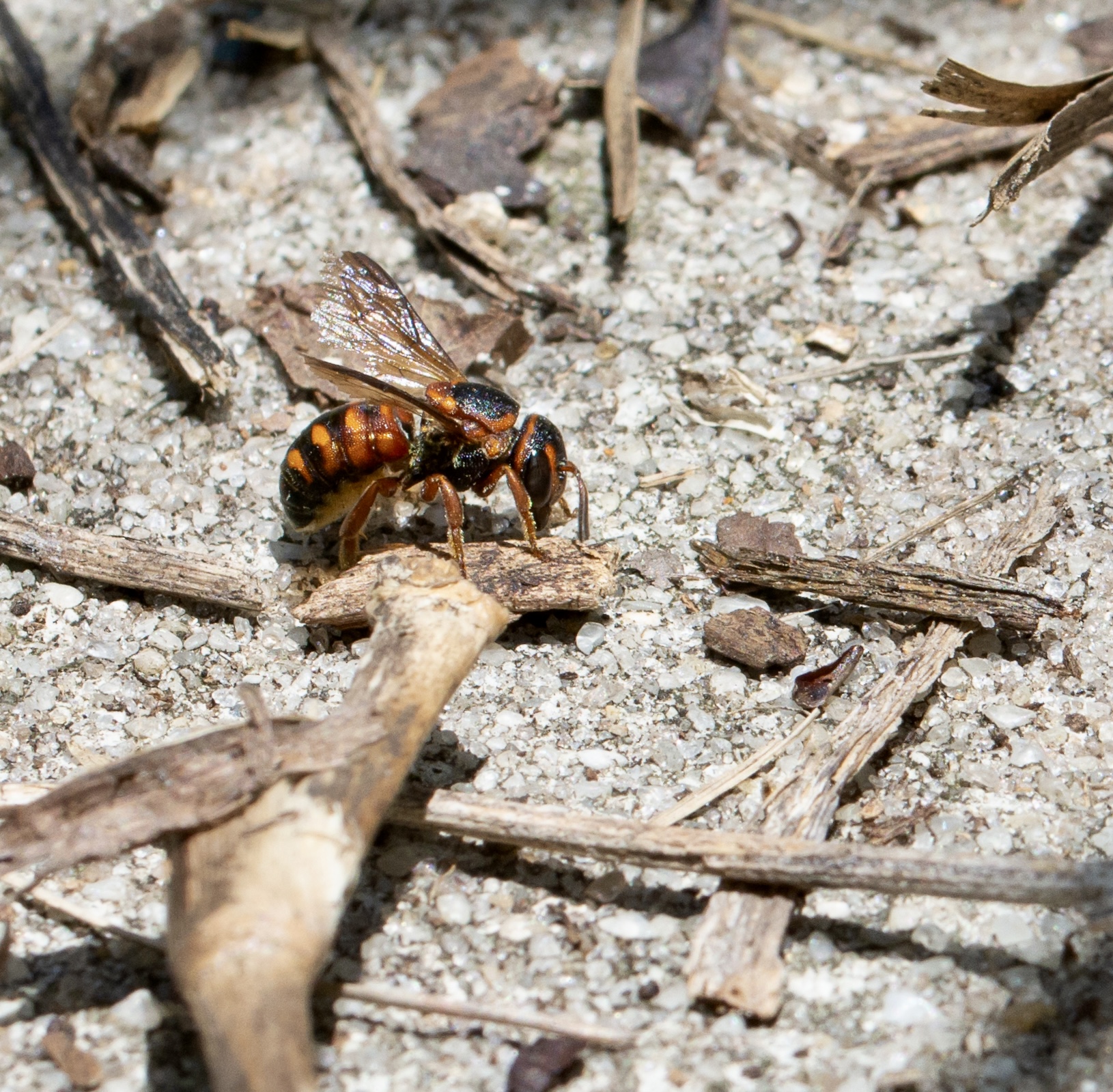
Fall pruning can unintentionally remove nests with developing bees. Some native bees don’t nest in the soil — instead, they use hollow or soft-pithy stems of native plants (see list below). Inside the stem, they create a series of chambers, each housing a developing bee, and seal the entrance with resin, pebbles or plant material. One of the simplest ways to support these bees is to leave stems standing and allow them to decompose naturally.
Most guidelines that recommend cutting stems to 12–24 inches are a compromise between human habit and bee needs. But in nature, no one is intentionally trimming stems, it happens naturally, over time. When we leave entire stems intact:
- Bees can choose the best spot. Some species nest deeper, prefer specific stem textures, or need stems to weather over time before use.
- Moisture and decay make stems usable. As Sam Droege of the USGS Bee Lab notes, exposure to rain and microbes softens stems so bees can excavate them.
- Standing stems stay anchored. Upright stems are more stable and mimic the natural habitat bees evolved with.
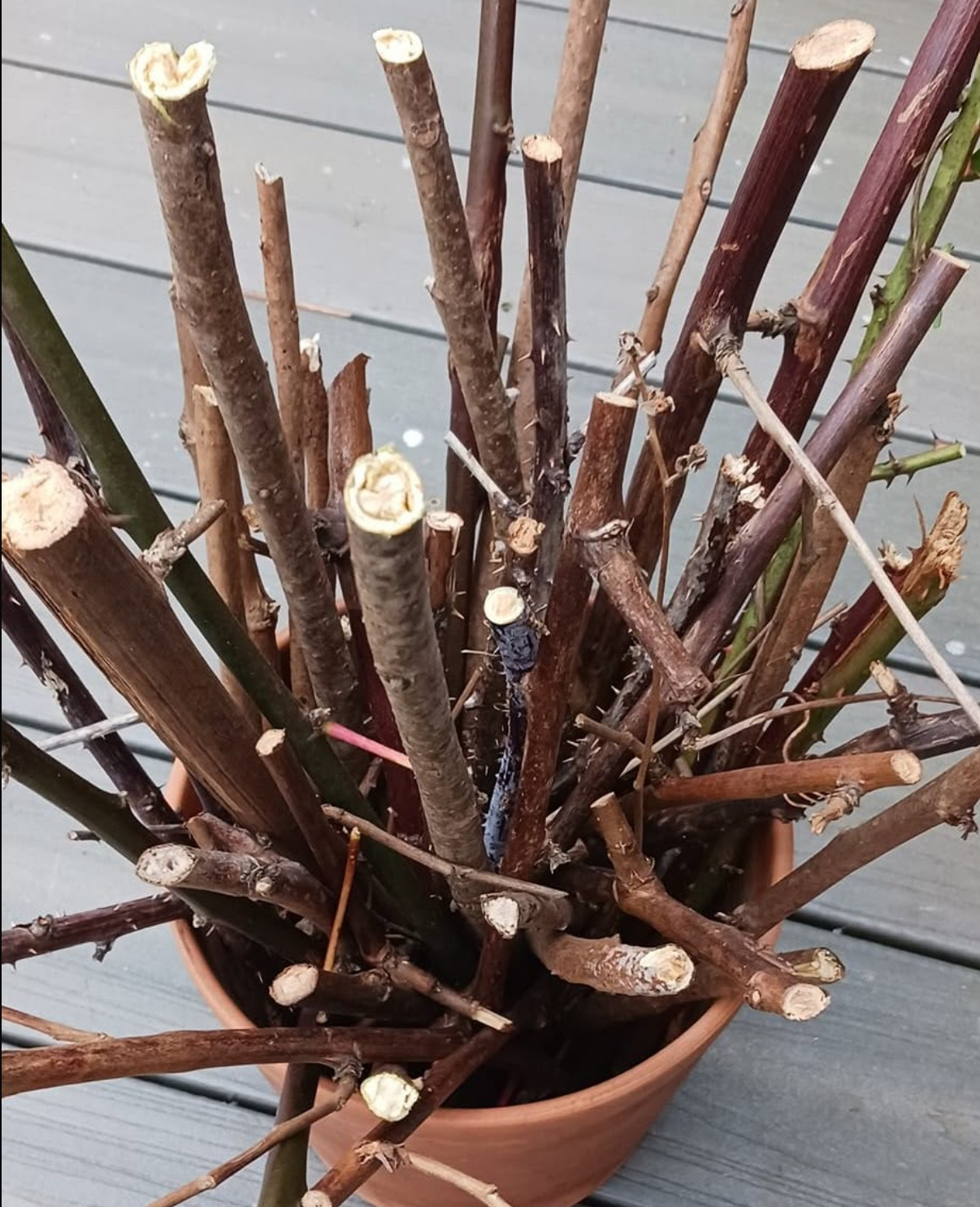
If you need to tidy your garden – due to HOA rules or code maintenance – cutting stems to 12–24 inches in spring is still helpful and supported by the Xerces Society. But whenever possible, leaving full-length stems, even in just a small section of the yard, offers better nesting habitat and supports more bee species.
Another option is to collect hollow or pithy plant stems from your garden and place them upright in a sturdy, wind-protected container or pot. This mimics natural nesting conditions and provides the opportunity to observe stem-nesting bees up close.
Provide Nesting Sites by Adding Florida Native Plants with Hollow or Pithy Stems to Your Garden
Fall is a great time to add new plants to the garden, so choose species with hollow or pithy stems that provide nesting spaces for above-ground bees such as small carpenter bees (Ceratina spp.), yellow-faced bees (Hylaeus spp.), and Florida pebble bees (Dianthidium floridiense). When natural stem materials are available in the garden, there’s no need for commercial bee boxes.
Florida native plants with hollow stems:
- Milkweed (Asclepias spp.)
- Rattlesnake master (Eryngium yuccifolium)
- Joe-Pye weed (Eutrochium spp.)
- Scarlet rosemallow (Hibiscus coccineus)
- Mauve mallow (Abutilon hulseanum)
- Cardinal flower (Lobelia cardinalis)
- Dotted horsemint (Monarda punctata)
- Pink muhly grass (Muhlenbergia capillaris)
- Fakahatchee grass (Tripsacum dactyloides)
- Chalky bluestem (Andropogon virginicus)
- Coneflower (Echinacea purpurea)
- Golden Alexander (Zizia aurea)
Florida native plants with pithy stems:
- White crownbeard (Verbesina virginica)
- Purple coneflower (Echinacea purpurea)
- Sea oxeye daisy (Borrichia frutescens)
- Liatris (Liatris spp.)
- Tropical sage (Salvia coccinea)
- Asters (Symphyotrichum spp.)
- Giant ironweed (Vernonia gigantea)
- American pokeweed (Phytolacca americana)
Don’t Toss the Logs — Some Bees Nest in Wood and Cavities
Not all native bees dig into soil or nest in plant stems. Some species, such as the pure green sweat bee (Augochlora pura), nest in soft, decaying wood in logs, old tree stumps, or dead branches.
You might also find male resin bees and some male leaf-cutter bees sleeping inside these cavities, using them as safe overnight shelter.
In yards where every branch is trimmed and tidied, habitat with wood nesting materials can be difficult for bees to find. Leaving a log along a fence line, tucking a thick limb into the back of a pollinator bed, or lining a garden path with large branches gives these bees a place to nest and rest.
What looks like yard waste to us might be the only overwintering habitat available to the bees searching for this type of woody material.
Don’t Clear It All — Bumble Bee Queens Need a Place to Rest
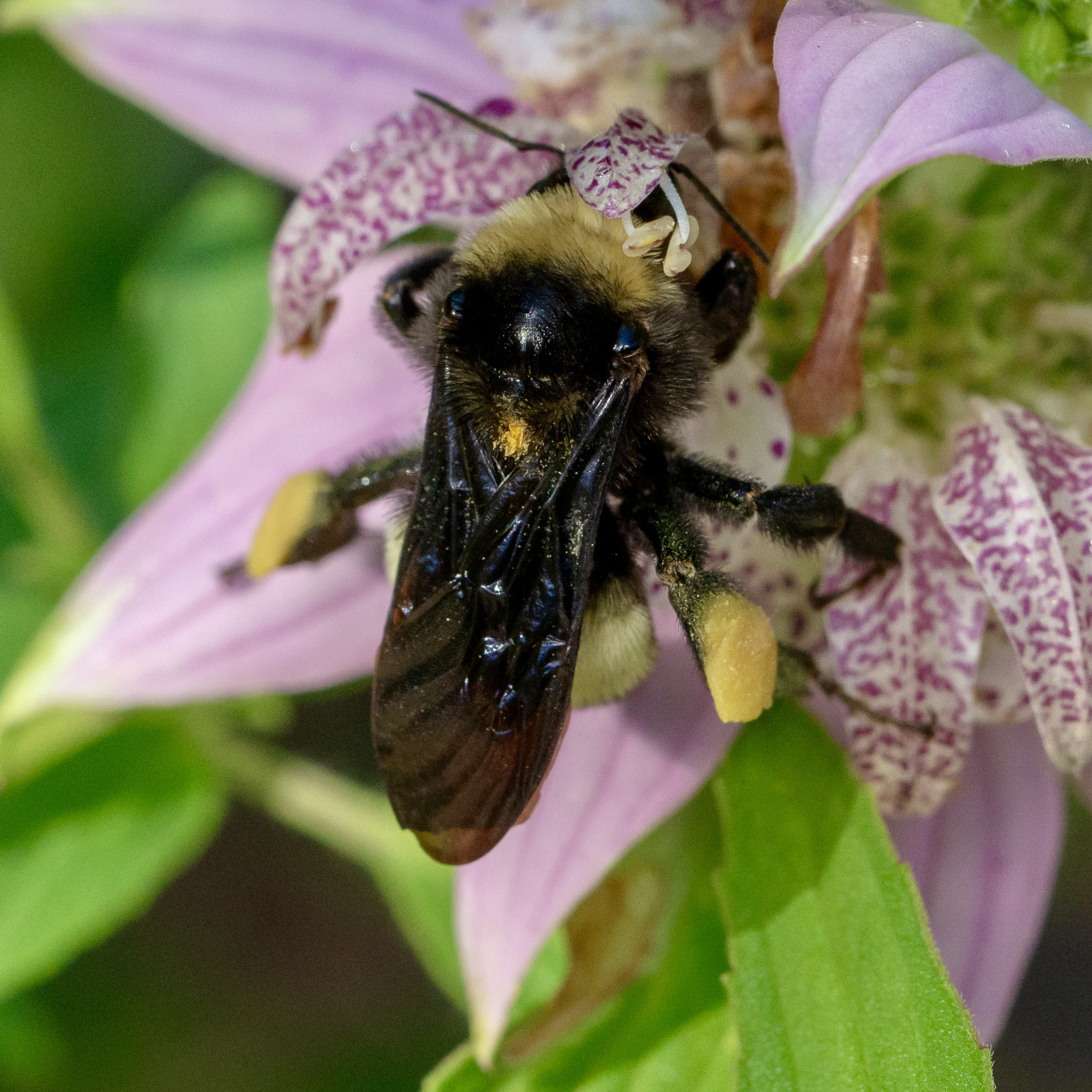
Florida’s bumble bee populations are declining, in part due to habitat loss and lack of overwintering sites. Unlike honeybees, Florida’s bumble bees don’t live year-round in large colonies. Their nests are seasonal, and each spring new nests are constructed. In a landscape dominated by turf grass, few suitable foraging and overwintering options exist.
Before heading off to hibernate, these queens will spend some time foraging on fall-blooming plants to build up fat reserves. Once sufficiently nourished, they seek insulated, undisturbed places to overwinter — often less than two inches below the soil surface, tucked beneath leaf litter, or nestled under clumps of native bunch grasses.
Want to learn more about bumble bee life cycles? Visit the Xerces Society’s About Bumble Bees page.
Don’t Deadhead Everything — Male Bees Need a Place to Sleep
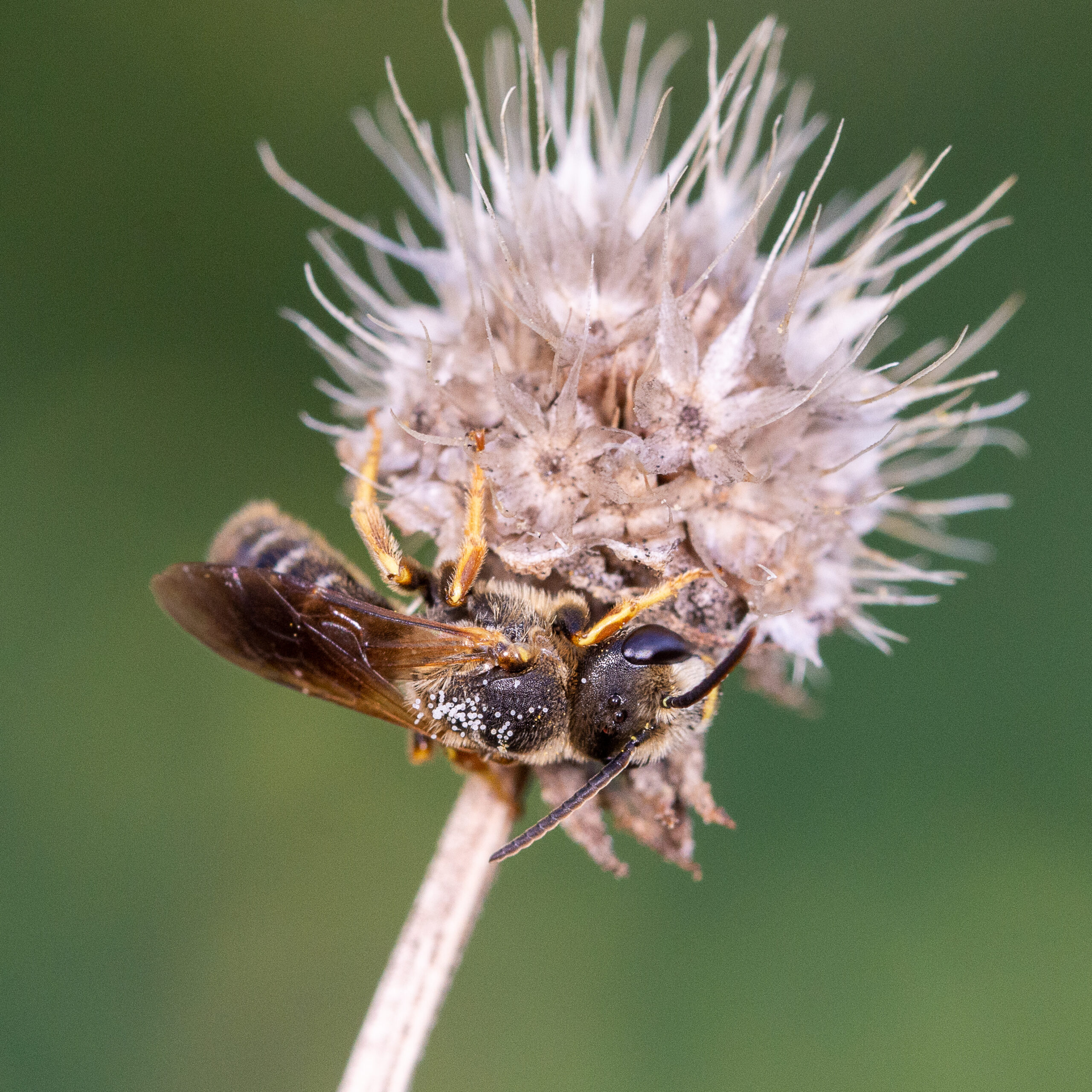
Most male bees sleep on plant material — under flower heads, inside flowers, and on dried stems or native bunch grasses. Resisting the urge to remove faded or spent blooms helps provide these sleeping spots. By leaving a mix of flower heads and stems untouched, and not deadheading all the blooms, you’ll provide safe overnight shelter for male bees as well as other pollinators — and give yourself a place to observe bees in the evening.
Support Native Bees with Fall and Winter Blooming Plants
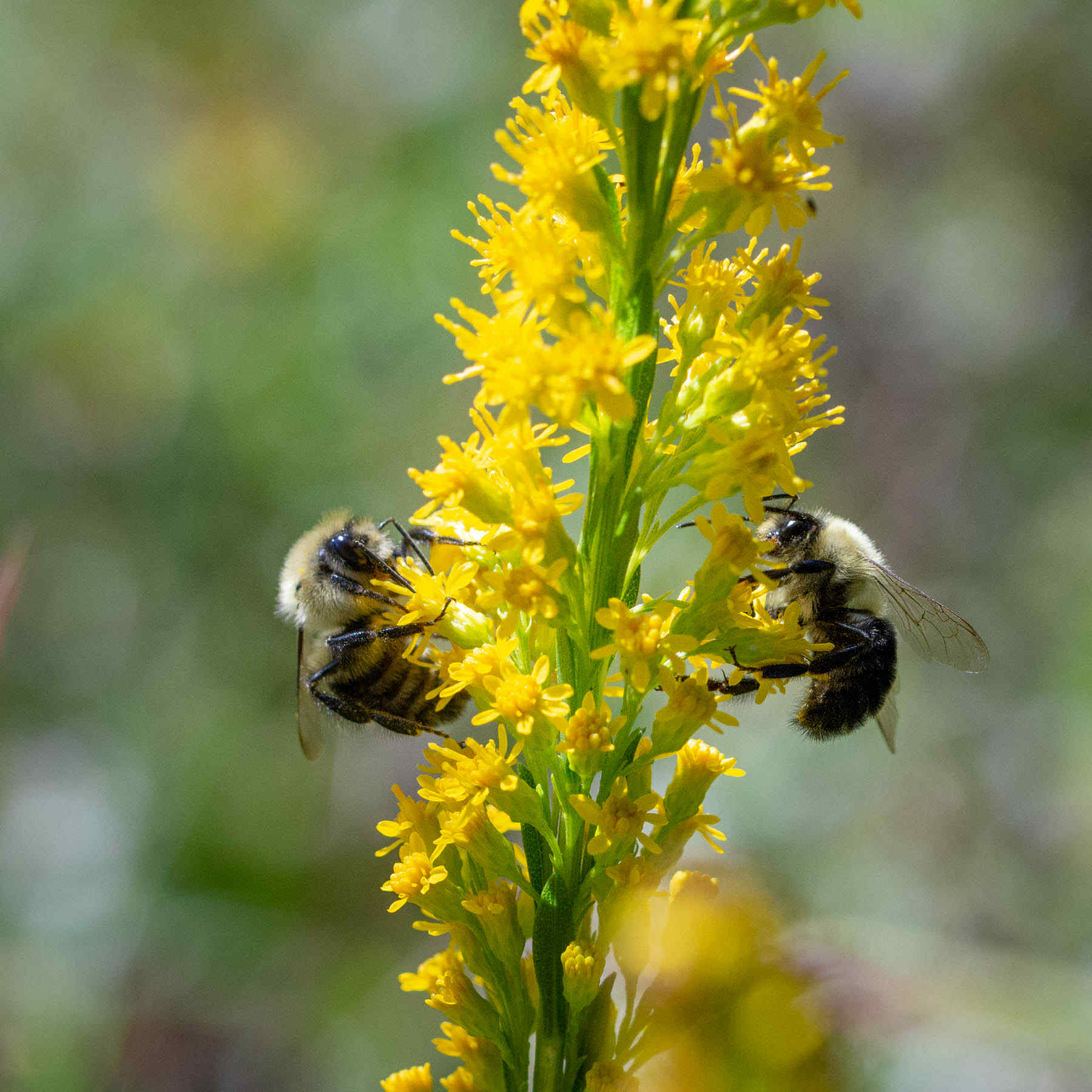
While most people associate pollinators with spring and summer flowers, some native bees in Florida remain active well into fall and even through winter in places where heavy frost and freezes don’t often occur.
Some of Florida’s best fall-through-winter blooming plants include:
Wildflowers and forbs
- Goldenrod (Solidago spp.)
- Frostweed (Verbesina virginica)
- Blue curls (Trichostema dichotomum)
- Silkgrass (Pityopsis graminifolia)
- Asters (Symphyotrichum spp.)
- Liatris (Liatris spp.)
- Bear’s foot aster (Smallanthus uvedalia)
- Snow squarestem (Melanthera nivea)
- Tropical sage (Salvia coccinea)
- Blue porterweed (Stachytarpheta jamaicensis)
Shrubs and vines
- Privet senna (Senna ligustrina)
- Buttonsage (Lantana involucrata)
- Scorpiontail (Heliotropium angiospermum)
- Tea bush (Melochia tomentosa)
- St. Andrew’s cross (Hypericum hypericoides)
- Yellow necklacepod (Sophora tomentosa)
Adding these plants to your garden and letting them bloom through the cooler months without deadheading helps bees bridge the seasonal gap. And where possible, leave a few weedy species, like Spanish needles (Bidens alba) so their flowers can continue feeding pollinators well into winter.
Early Bloomers for Late Winter
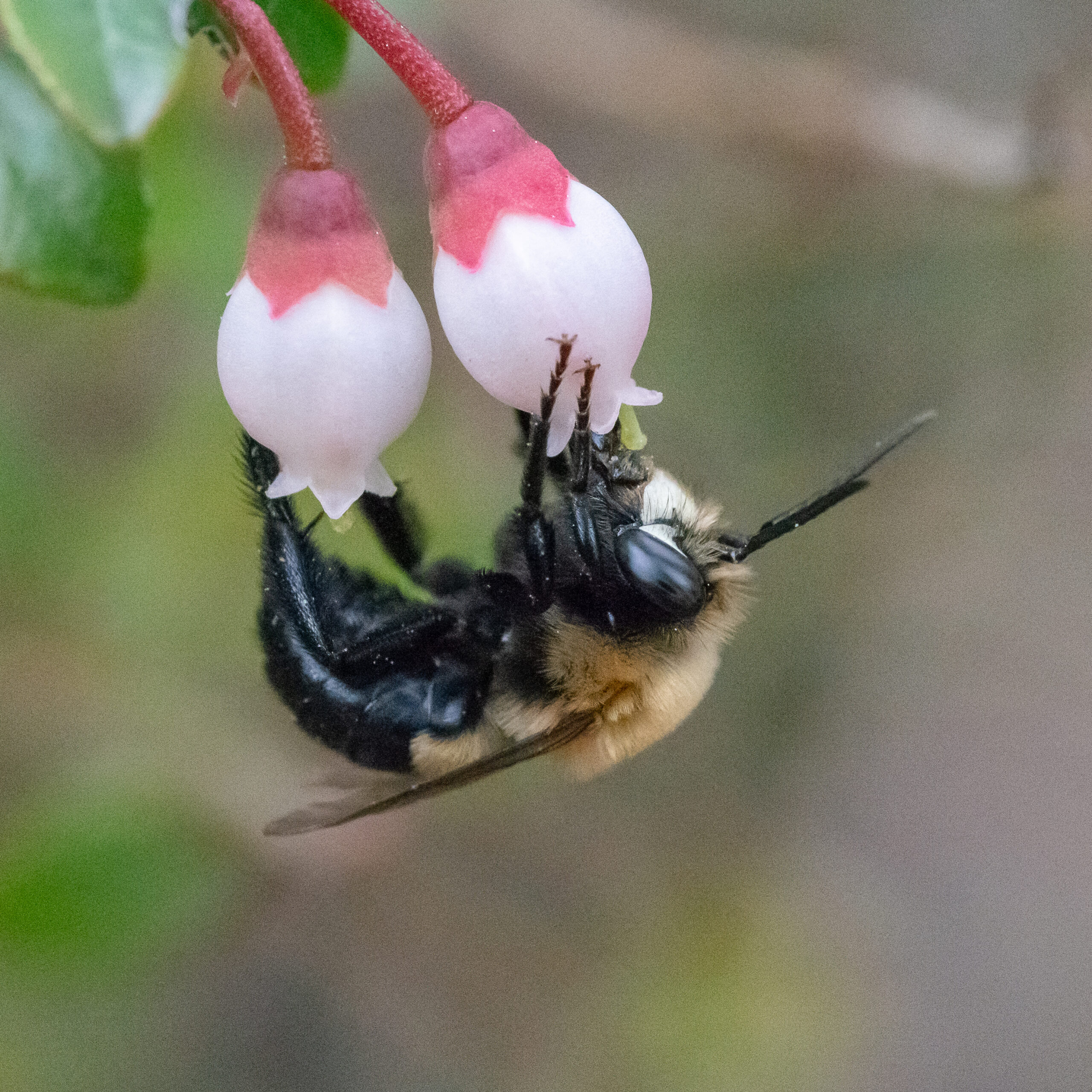
Finally, as winter wanes, some Florida native plants begin blooming early, particularly in places where hard freezes are uncommon. These blooms provide a lifeline to the earliest-emerging bees, such as the southeastern blueberry bee and small metallic sweat bees.
If you’re looking to support these early pollinators, consider planting late-winter bloomers such as:
- Toadflax (Linaria canadensis)
- Lyreleaf sage (Salvia lyrata)
- Blue-eyed grass (Sisyrinchium spp.)
- Ohio spiderwort (Tradescantia ohiensis)
- Carolina jessamine (Gelsemium sempervirens)
- Highbush, Darrow’s, and shiny blueberries (Vaccinium spp.)
To find these fall- and winter-blooming natives, visit the Plant Real Florida nursery directory.
Your Yard, Their Future
With so much wild land disappearing across Florida, the choices we make in our own yards, no matter how small, carry more weight than ever. Whether a patch of bare soil, a log tucked under a tree, or a few uncut stems left through spring, these simple acts create space for native bees to nest, rest, and return.
They also help in other ways. Leaving native bunch grasses and leaf litter in place can slow stormwater runoff, improve water absorption, and support the soil itself, connecting pollinator health to the larger health of our landscapes.
Wild spaces are disappearing not only because of overdevelopment but also due to increasingly severe hurricanes, making gardens of all sizes essential refuges. For those replanting after storm damage, it’s an opportunity to plant native species and adopt seasonal practices that help bees thrive.
Supporting Florida’s native bees isn’t just about planting more flowers in spring and summer — it’s about what we leave behind in fall and winter and learning to see the life quietly depending on us, even when the garden looks still.
Your yard doesn’t have to be wild to be welcoming. This season, try leaving just one corner for the bees and be part of sustaining future generations of bees to come.
By Laura Zurro Originally published on August 12, 2025
Laura Zurro is a native bee conservation photographer and naturalist based in Florida. She uses photography to connect people with the diversity and beauty of native bees, while highlighting their ecological importance. Zurro is also the founder of the Facebook group Florida Native Bees, a central hub for learning about Florida’s native bee species. Her work can be found at LauraZurro.com.