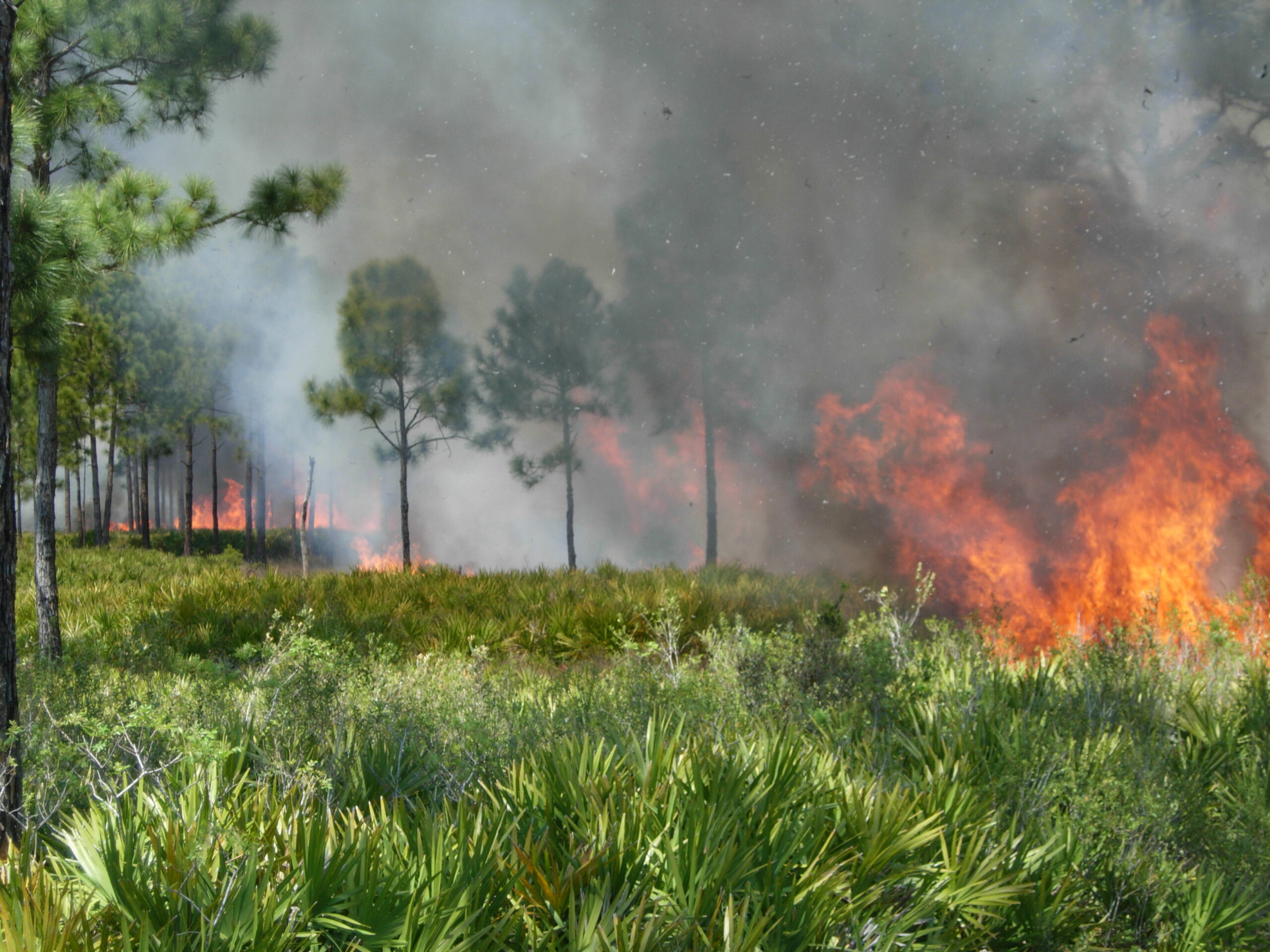
If all those dead brown branches and leaves in your yard are making you unhappy, just be glad you’re not Chris Reed, who leads the Southwest Florida Water Management District’s land management section. He’s in charge of 162,000 “fire-dependent” acres, most of which were impacted by January’s historic cold weather and all of which are under severe drought conditions.
The dry conditions, combined with dead foliage, are likely to fuel wildfires across the state and region. As of mid-February, 654 wildfires had burned 21,000 acres, according to the Florida Forestry Service, and Governor Ron DeSantis has declared a state of emergency. “We need six or eight or even 10 inches of rain at this point to get through the spring season,” Reed said.

During most years, Reed leads a team that sets thousands of acres on fire in carefully controlled prescribed burns. It’s the top management tool for preventing wildfires that burn out of control, like the 1988 fires that closed major highways and burned more than 500,000 acres.
Prescribed burns help control wildfires by consuming dead wood that fuels them. “The goal is to burn every four years,” he says. “That works out to about 30,000 acres a year, but we don’t always hit that target.” District-owned lands near urban infrastructure are particularly challenging, he adds, because the small window for safely burning is even smaller near neighborhoods that could be impacted by smoke.
“People lose sight of why prescribed burns are so important when we go for years without wildfires,” he said. “It’s been eight or nine years since we’ve had a bad wildfire but prescribed burns are our best way to prevent wildfires. Prescribed burns usually last less than a day, but a wildfire can last for weeks, or even months.”
Learn more:
Fire Fest on Feb. 21 from 9 am to 2 pm is Hillsborough County’s annual event at Medard Park in Plant City highlighting prescribed burns and explaining why they’re so important. Exhibits include a “base camp,” where visitors can explore how weather, fuels, and topography influence prescribed burns, and a sandbox demonstration that shows how they work from a bird’s-eye view. Kids can play fire-themed games and complete an obstacle course to earn an official Junior Wildland Firefighter helmet, or get close up with the trucks, helicopters and other equipment used in prescribed burns.
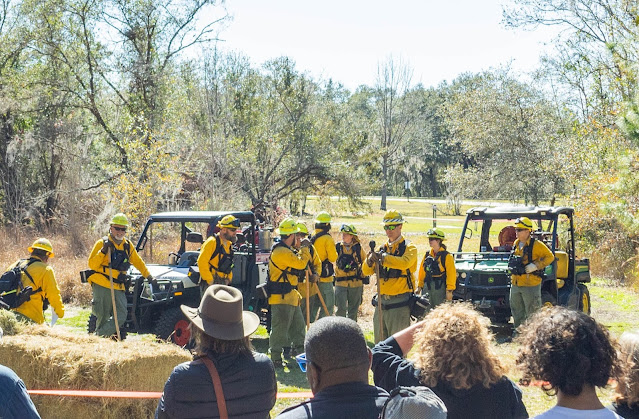
The grand finale, at 1 pm, will be a prescribed fire demonstration where a team of highly trained wildland fire technicians takes visitors through each step of a prescribed fire, including coming up with the fire prescription, checking weather conditions, assigning positions on the fire line, and more. Please note, this event is dependent on weather conditions on the day of the event.
Protect your home. Over the past 50 years, the Florida Forest Service estimates that up to one-third of Florida homes have been built in outlying fringe areas known as the wildland/urban interface, where structures intermingle with forests and wildlands. Residents who live near nature preserves or other open land should make plans in advance of wildfires to protect their homes.
Those homeowners should create what the Forestry Service calls a “home ignition zone” by reducing fuels and careful landscaping 100 to 200 feet in all directions. Case studies show that the most critical area of defensible space is within 30 feet of the structure and call for:
- Lean – small amounts of flammable vegetation.
- Clean – no dead vegetation.
- Green – plants are healthy and the lawn is well irrigated.
Other tips include thinning trees and shrubs to leave 10 to 15 feet between canopies, pruning tree limbs to a height of six to 10 feet and removing flammable mulch. Wood piles and propane tanks should be at 30 feet away and driveways should be at least 15 feet wide so that emergency vehicles can reach your home.
Wildfires are likely to be severe this season, but following these steps can help you prevent damage to your home.
By Vicki Parsons, originally published February 16, 2026